
File a Claim

Make a Payment

Facebook Twitter Feeds
logo-main-white
  • Home
  • About Us
    • Our Insurance Carriers
    • Careers
  • Insurance Types
    • Auto Insurance
    • Bonds
    • Commercial Insurance
    • Churches Insurance
    • Home Insurance
    • Life Insurance
    • Medicare Insurance
    • Mexico Insurance
    • Mobile Home Insurance
    • Motorcycle Insurance
    • Non-profit Insurance
    • Renters Insurance
    • Insurance for Snowbirds Arizona
    • Golf Cart Insurance
  • Locations
    • Casa Grande
    • Maricopa
  • Blog
  • Contact Us
  • Get Free Quote
Text or Call Us Today!
520-836-3244

Author: Steve G

Insurance blog, articles, and news written by Stephen Gebhardt, founder and CEO of Gebhardt Insurance Group an Insurance agency in Casa Grande, Arizona.

Is Renter’s Insurance Worth It?

June 16, 2017 by Steve Gebhardt

Renter's insurance photo

Many people do not have renter’s insurance because they don’t realize the value of it.  Assuming your landlord’s insurance will cover you in the event of a disaster is dangerous, incorrect, and potentially financially devastating.  While your landlord’s insurance policy covers the home that he or she owns, it usually will not cover a tenant’s belongings or expenses.  Once a landlord stops living in a home and decides to rent it out he or she will typically change the insurance to only cover the structure of the home.  This means you and your belongings will not be insured if something should happen.

What Does Renter’s Insurance Cover?

Renter’s insurance can be incredibly helpful because of all the things that it covers.  Many landlords will even require that tenants carry renter’s insurance, specifically including liability insurance.  Don’t stop at the bare minimum.  A comprehensive renter’s insurance policy can provide liability coverage and so much more.

Personal liability insurance for renter’s can provide much needed coverage for items such as dog bites and lawsuits.  If you have a pet that suddenly attacks someone and causes them injury, your renter’s insurance may cover you in the event of a lawsuit.  It can also pay for the injured parties medical expenses.  Liability coverage helps offset your costs in the event of an unforeseen legal issue.

Renter’s insurance also helps with the cost of replacing your belongings.  While it is not pleasant to think about you could lose everything in your home due to theft or unforeseen disaster.  Flooding, fire or even a strong storm can damage your home and everything in it.  Make sure that you have coverage that can pay to replace your items.

Offsite storage may also be included in your renter’s policy.  A robust renter’s insurance can include coverage for your items in an offsite storage facility.  If something were to happen to your belongings your policy could cover up to 10% of the value of your items.

Travel disasters can also be covered.  If your personal belongings are damaged while on vacation, as long as the damage was caused by something covered under your policy, your renter’s insurance will pay to replace your items.  A pickpocket or thief may steal your wallet or laptop out of your hotel room.  Your policy could cover these items.  If your car is stolen while you are traveling, your renter’s insurance can come to the rescue.

Another expensive part of unforeseen disasters is displacement.  If you were unable to live in your home due to an event that is covered under your policy, for example fire damage, water damage or hazardous mold, your renter’s insurance may pay for the ensuing expenses.  Living in a hotel long term and boarding your pets can get expensive quickly.  A short-term rental could conservatively cost $100/night.  If you are displaced for just a month, you could be looking at a $3000 bill just for a place to stay.  Renter’s insurance could take care of these expenses for you.

Your vehicle may also be included in your policy.  If you have items in your vehicle that are stolen, your renter’s insurance policy may pay to replace them.  If you routinely leave items such as a laptop, cell phone or any item of value in your vehicle, your renter’s insurance policy may save the day if any of these items were stolen.

How Can Renter’s Insurance Prevent Financial Catastrophe?

If you lost all of your belongings in a fire or other unexpected event, could you afford to replace everything?  Even if you think the answer is yes, I challenge you to go through your home room by room and estimate what it would cost to replace each item.  Start a running tally and don’t forget to include the small stuff.  Many people are tempted to only consider high ticket items when considering insurance but this doesn’t take into account the actual cost of what it would take to replace everything.  If you tallied the value of items such as your silverware, linens, bedding, picture frames, furniture you might be surprised at how quickly these items add up.

Get Renter’s Insurance Today

Whether you are in college and just getting started on your own or have an established career and family, if you are renting you should seriously consider renter’s insurance.  Renter’s insurance can provide liability coverage as well as financial solvency in the event of a disaster.  Your belongings can be protected and you can have peace of mind for a relatively small monthly or annual fee.  Renter’s insurance can be quite affordable and offers you coverage in many different situations.

Contact Gebhardt Insurance and protect yourself and your financial health with a solid renter’s insurance policy today.  We will work with you to make sure you get an insurance policy that provides the coverage you need at a price you can afford.

Filed Under: Home Insurance Tagged With: renters insurance

Home Protection Technology Discounts

June 6, 2017 by Steve Gebhardt

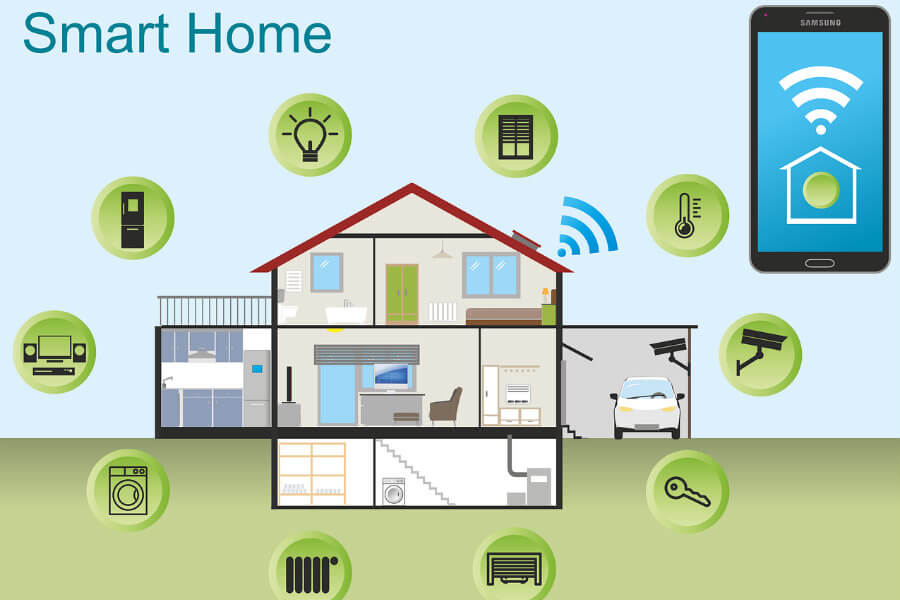
Home technology photo

Home Technology: A Primer

Indeed, the smart home has arrived and it will certainly change the way we live. Today, you will be able to control most things in your home through your phone and the internet. You can perform a variety of tasks with just one click of the button!

Smart home technology is really gaining popularity across the country today. A recent survey made by Coldwell Banker indicated that smart home technology has now become mainstream. It has become the trend.

The survey reported that 45% of Americans either already own some sort of smart home technology or plan to purchase within the next year. According to experts, the US market is expected to double within the next year.

In 2017, smart home technology is expected to be present in around 30 million homes in the country. The number of smart home devices has really grown tremendously.

Among the very popular ones are the smart appliances- washers, refrigerators, dryers, TV, etc.; the smart home safety and security systems- sensors, cameras, monitors, alarm systems; and the smart home energy equipment-smart thermostat, smart lighting, etc.

Well, the most obvious benefit we get from smart home devices is convenience. These connected devices can handle more operations.

Hence, you are freed up from performing those tasks yourself and therefore, you can engage in other worthwhile activities. Further, these devices can help you reduce cost and conserve energy.

For instance, smart air conditioners can be put off with one click when you are not at home. This will allow you to reduce your energy consumption and electric bill. The same is true with your smart lighting.

Another important benefit of using such smart devices is that they can actually prevent home accidents and improve your home safety.

For instance, a smoke detector can alert you via your phone if there’s a problem at home. A smart security system is very easy to set up and can help you monitor your house, watch for intruders and even check in on the temperature and air quality through built-in sensors.

A smart weather station can give your constant readings about what’s going on around your house and enables you to get accurate weather readings.

Smart home technology is also applicable for mobile homes, visit a home park and have an inquiry on how smart technology greatly protects mobile homes.

Insurance and smart home technology

Insurance companies favor smart home devices. This is because homes with home protection technology devices are protected homes.

Hence, these homes are subject to lower risk. A number of insurance carriers in the US are offering incentives to homes with smart devices ranging from moisture sensors to smart thermostats to video doorbells.

A certain insurance carrier offers a discount on homeowner’s insurance for a home with a home security monitor. A home alert discount can lead to up to 10% reduction in your home or renter’s insurance. You will have lower premium if you have an alarm system that detects door or window entry through motion sensors and an audible alarm.

Still, another carrier cuts the cost of fire insurance premium if your home has a smart smoke detector. Further, homes with water monitors and automated light and energy controls also enjoy insurance discounts in certain insurance carriers.

According to experts, people can leverage some of these connected devices to make themselves insurable. These devices can actually prevent losses. With fewer losses, more goes into the insurance company’s bottom line.

Experts further say these smart home devices can give the win-win situation to both the insurance clients and insurance companies. Clients benefit from getting lower rates. Insurance companies, on the other hand, benefit because, with fewer loss events from protected homes, more money goes to into their bottom line!

Recently, a research released by NTT Data, a global business and IT service provider, noted that 83% of US homeowner’s insurance carriers believe that smart home technology will attract new customers and improve customer relationships. Really, something good is expected with the interplay of smart technology with the insurance industry in the coming years.

However, there are still challenges faced by insurance carriers in implementing and finalizing smart home programs. Among these are the inability to gain access to data from smart homes, the difficulty of building analytics into the carrier underwriting process and the expense required to purchase and install devices.

The impact of smart home technology on the insurance industry will certainly still have a long way to go.

At the moment, if you are an insurance client, it is best to check out with your insurance agent if you can avail of certain discounts with your home technology smart devices when you acquire or renew your homeowner’s, renter’s, flood, fire insurance policies.

Contact us for more information on home technology discounts on insurance.

Filed Under: Home Insurance Tagged With: home technology

How Does Term Life Insurance Work?

March 8, 2017 by Steve Gebhardt

term life insurance

Life insurance can be used to protect your loved ones from a sudden loss of financial support. It can certainly bridge the financial gap and help your loved ones get back to their feet after your loss. The proceeds of life insurance can be used to cover immediate expenses.

These may include unpaid medical and hospital bills, funeral expenses, mortgage payments, meeting business commitments, even meeting college expenses for the children. In addition, life insurance helps maintain the family’s standard of living during such a difficult time.

It lets a person leave an inheritance. Moreover, life insurance can improve one’s credit rating. Life insurance in itself is a financial asset and may then help increase your credit score.

There are three basic types of life insurance- term life insurance, whole life insurance and universal life insurance.

The first of these three is term life insurance. This is also known as “pure” life insurance. This policy pays out the death benefit if the named person dies within the defined term. The most common terms are 10, 20 and 30 years. If the named person dies after the term expires, then there will be no payout.

This type of life insurance is typically the least expensive way to purchase a substantial amount of death benefit per premium dollar basis over a specified period of time. It meets coverage needs up to thirty years.

The disadvantages of this type of life insurance though include having no savings feature and having no lifetime coverage. Also, if the term of your policy is about to expire and you need to renew your policy, you might be shocked at how high your premium has increased, especially if your health has declined.

It may even be possible that you will not be able to renew the policy because you no longer find it affordable. Hence, experts suggest that on deciding the terms of your insurance, you have to consider the term length.

Term life insurance policies also have maximum age issues. Experts say if you’re past the age of eighty, it will be very difficult for you to get term life insurance.

There are two kinds of term insurance. There’s the “annual renewable term”. This has a term of one year (coverage), which you can renew annually. This has the lowest annual premium, but the amount of premium may increase as you age.

Hence, if your goal is to keep your initial costs down but you believe your earnings will increase significantly in the future, it is best to have this kind of policy.

There’s also the “level premium term” which you can buy for a specific multi-year period- 5, 10, 20 or 30 years. This kind of policy allows you to lock the amount of premium for a given multi-year period. Hence, this can be a smart way to insulate you from increasing amount of premium.

How much will it cost you? Well, the amount of premium that you will pay will depend on several factors- your age, health and the amount of your death benefit. Obviously, the younger and healthier you are, the lower is your life insurance premium. In the US, the most popular option for a term life insurance is a 20-year policy, worth $250,000.

The average annual life insurance cost of this policy for a 25-year-old non-smoker is $331. This will increase to $433 if the age increases to 40 and will increase to $2,495 for a 60-year-old. The amount of premium will be doubled to tripled if the person insured is a smoker.

How big should your life insurance be?

As a rule of thumb, your death benefit should be equal to seven to ten times of your annual salary. You can actually determine it in another manner.

First, determine the amount of income you wish to provide your heirs and beneficiaries after you die. From this amount, deduct all other income sources that they will be able to tap- retirement accounts, pensions, social security, etc.

For the remaining gap, this is the amount that you will fill with life insurance.

The second type of life insurance is whole life insurance. This has no predefined term, provides death benefit over the “whole” life of the insured as long as premiums are paid. Further, it accumulates cash value which the insured can withdraw or borrow against during their lifetime.

Its disadvantages, though, include inflexible premiums and a considerably lower rate of return than other investments.

Finally, the third type is universal life insurance. This policy has a cash value that is determined by short-term interest rates rather than the stated long-term interest rate of a whole life policy. Premium payments in excess of the cost of the policy are added to the policy holder’s interest bearing account. The disadvantages of this policy include decreased death benefit or increase in premium if interest rates decline.

Filed Under: Life Insurance Tagged With: term life insurance

How Can I Protect My Home From Accidental Fires?

February 1, 2017 by Steve Gebhardt

Fire prevention supplies for kids photo

A residential fire could be most devastating to a family. Seeing your home burning does not only mean losing the structure of the family home, but also burning with it are the precious memories that your entire family has built. It can also be fatal as it could take the lives of your loved ones.

For these reasons that regular fire safety measures, including fire prevention supplies for kids, are encouraged for every family home. These safety measures are not only intended as means to prevent fire but also to instill readiness in case one occurs in your very home.

In fact, children are prepared by parents by introducing them to fire prevention supplies for kids. While fire prevention remains to be an adult responsibility, it is encouraged that children should be aware of their role in keeping their home safe and fire-free.

Be Prepared

Being prepared means a lot in accidental fires in residential homes. According to a study, fires that occur in homes without functional smoke alarms account for nearly 65 percent of total deaths. Moreover, it has been proven that smoke alarms coupled with a detailed fire escape plan have saved lives when routinely practiced.

There are a wide array of cautionary measures that you can make to protect your home from accidental fires.

Buy Fire Prevention Supplies for Kids

Fire prevention is your best weapon to protect your home from accidental fires. An important step in fire prevention is teaching your young kids of the dangers of fire in your home.

Teaching the children about fire prevention may not be easy, but arming them with fire prevention supplies that are designed for kids gives them a leg up. While it is important for the family to have an escape route in case of fire, it is still of paramount importance that family learn how to avoid fire in the first place.

Here are some items for your kids that could be helpful in your fire prevention measures:

  • Fire safety books
  • Fire safety coloring books
  • Fire Safety movies
  • Colorful fire escape plan
  • Extension cords with fire shields
  • Flame-resistant pajamas
  • Safety pilot light
  • Childproof lighters
  • Heat-resistant gloves
  • Flame-resistant oven mitts
  • Fireplace door lock

Install Fire Alarms

In addition to giving your children a fighting chance with fire prevention supplies for kids, installation of fire smoke alarms outside the bedrooms or any place where someone sleeps is highly encouraged. Fire alarms can also be installed in furnace areas of the house.

You must make sure that there is at least one alarm on every level of your home, including the family basement. But these alarms should be kept away from the kitchen and the bathroom to avoid false alarms when there is smoke from cooking or even during taking hot showers.

Once installed, you need to test these smoke alarms once a month to know if they are working properly. It is also advised to use smoke alarms that have long battery life to lessen the frequency of changing the batteries to only once a year.

But the smoke alarms should be replaced every ten years and be cleaned once a month. It would be better if the smoke alarms are equipped with flash lights especially in homes with children and adults who are either deaf or have difficulty of hearing.

Hold Regular Fire Drills

Nothing beats being ready for any contingencies in the future. In addition to fire prevention supplies for kids, to protect you children once an accidental fire has occurred, it would be best if they and the adults in the family are already aware of what to do during fire.

You have to make an escape plan and practice it with your family. Young children who are three years old and above can already begin learning what to do in case of fire. The ultimate goal for the escape plan is for everyone to reach safety ground after the occurrence of fire.

To make it more effective, you need to draw a floor plan of your home and discuss the escape plan with everyone. You need to make sure that everyone knows how to get out from the house, as well as how to open doors and windows for easy exit.

If you live in an apartment building, you need to emphasize to the young kids that using the elevator is not advisable. Lastly, you have to practice the exit drill at least twice a year. The practice drills should emphasize that getting out from the fire should be done quickly but calmly and peacefully.

Get Fire Insurance

Fire insurance is a type of insurance that covers damage or loss of property due to a fire. This is a specific insurance in addition to the homeowner’s insurance and it covers the cost of reconstruction and repair of the proper above what was covered by the property insurance policy.

The fire insurance policy covers you against fire loss or damage brought by fire ignition, electrical failures, gas explosions, and even natural disasters. Most fire insurance policies cover the home regardless of whether the fire originated from within or outside the family home.

If the home is totally lost from fire, the insurance proceeds can serve as reimbursement to the owner for the home’s current market value. However, insurance coverage limits are affected by several factors including the value of the home and its contents.

Nonetheless, getting insurance for your family home is the best way to protect it from accidental fires. The proceeds from the insurance policy will allow you to quickly rebuild your destroyed home or have them repaired in case there are only certain damages.

So get insurance for your home now and protect your family from devastation that accidental fires may cause.

Filed Under: Home Insurance Tagged With: fire prevention

Best Mobile Home Park in Arizona

January 27, 2017 by Steve Gebhardt

Lake Powell view

Arizona is home to stunning and relaxing mobile home parks. It would be great to spend some time and relax in these mobile homes or stay there after retirement. Of the many mobile home parks in the state, we have chosen five. The following are the best Arizona mobile home parks you would love to stay and live in.

The Best Mobile Home Park in Flagstaff

Are you looking for a second or new home in Flagstaff, Arizona? Do you want to stay in a nice, warm and peaceful neighborhood temporarily or permanently? Consider checking out this mobile home park in the area: Greenlaw Mobile Home Park is a safe, quiet and relaxing community in Flagstaff. It has all the basic amenities you can ask for in an Arizona mobile home park. Its custom-built homes are perfect for both retirees and seniors. You also get to enjoy their many amenities and facilities. A perfect place to start the next chapter of your life.

Prescott’s Finest Mobile Home Park

Pine Lakes is one of the best private communities in Arizona. Located near the beautiful Prescott National Forest, this mobile home park is surrounded by stunning views and natural wonders, which make it perfect for both serene living and exciting adventure. It’s a perfect package! The homes are relaxing and in tune with nature, with great amenities perfect for recreation, events and socializing. They are custom-built and energy-efficient. What more can you ask for?

The location of this private community is perfect. You get to live in a peaceful, nature-surrounded place, with the city just five miles away. It’s perfect for both as a retirement place or a second home. Whether you live here alone, with your partner, or with your whole family, you will never go wrong with Pine Lakes.

A Superb Mobile Home Park in Tucson

If you are looking for a mobile home park in Tucson that feels like a resort, stay at Tucson Meadows. This community is perfect for those who want to relax and have fun. This place is designed for both indoor and outdoor activities. Here, you can enjoy watching the beautiful Southwest sunsets.

It’s easy to own and maintain a home in Tucson Meadows. Aside from the well-built homes, you also get to enjoy the conveniences and amenities offered by one of the best mobile home parks in Arizona. There is even a spot in the community solely dedicated to recreation vehicles (RVs). This section is called “Winter Haven.” This is a perfect example of an Arizona mobile home park to stay in if you want a temporary second home. You can rent the RV site for a week to a year, or even longer. There are RV site activities and amenities you can enjoy as well.

The place is also perfect for retirees who want a place to spend the rest of their lives in. They have associations, activities and amenities tailored for active seniors.

A Phoenix Mobile Home Park You’ll Love

Live in a friendly neighborhood, away from the hustle-bustle of city life. Seated where the Citrus Orchard and Cotton Grave used to be, the Friendly Village of Orangewood is a premier mobile home park in Phoenix. It features 382 lots that are all landscaped, each having a beautiful view. You can rent a home or buy one. A perfect place to stay after retirement. This gated private community gives you peace of mind and a relaxing atmosphere. This Arizona mobile home park features a wide array of amenities, including a five-hole golf course and a clubhouse. This is definitely one of the best private communities in Phoenix and the entire state.

Page’s Outstanding Mobile Home Park

If you want a new home in Page, you will not go wrong with Lake Powell Mobile Home Village. This modern, growing community is located near the marvelous Lake Powell. It’s a convenient, well-equipped mobile home park surrounded by natural beauty. It is a safe, friendly, relaxing and peaceful neighborhood. Perfect for recent retirees, re-located professionals and peace-loving folks. You get to enjoy a safe environment and beautiful views at this Arizona mobile home park.

Lake Powell Mobile Home Village currently has 8,000 residents. A lot of visitors also visit and stay in the place temporarily, to have a peaceful and relaxing home while being away from the city. Despite its nature-oriented environment and serene atmosphere, it is equipped with modern amenities and well-maintained utilities. Schools, health care, community services and shopping centers are also nearby, so that wouldn’t be a problem. You’ve got everything you need here.

Now that you know where the hottest spots for mobile homes in Arizona are, think about protecting your investment with mobile home insurance. Reach out to us today to learn more.

Filed Under: Mobile Home Insurance Tagged With: Best Mobile Home Park, Prescott's Finest Mobile Home Park, Superb Mobile Home Park in Tucson

Why Is Whole Life Insurance Considered a Good Investment?

January 13, 2017 by Steve Gebhardt

Whole Life Insurance

At first glance, insurance seems like a straightforward and simple concept that is easy to understand. But permanent life insurance policies and determining which life insurance is best, term or whole, contain investment components that can cause much confusion.

For a whole life insurance policy, some of the money you pay as premiums accumulate cash value. This takes the form of a tax-sheltered investment account, which the policyholder may borrow against or withdraw from. This is a clever way of hitting two birds with one stone—insuring a specific contingency while at the same time providing a legacy for your heirs through said investment tool.

Having an investment component, whole life insurance provides policyholders the ability to accumulate wealth while paying for the premiums that cover the insurance cost. These premium payments also contribute to equity growth in a specific savings account.

Moreover, as indicated by its name, this type of insurance is intended to protect an individual for his or her entire life.

The use of whole life insurance depends on the specific needs and requirements of an individual. In fact, it is a well-settled principle that different insurance policies fit different people.

If you want to provide dependent family members with sufficient funding upon your death, then whole life insurance would be proper. It is also used by individuals if there is a need to liquidate business debts and mortgages, as well as to leave heirs money to settle outstanding obligations.

A whole life insurance policy also provides quick cash and much-needed liquidity to heirs and surviving family members that are dependent on you for support and sustenance.

Benefits of Whole Life Insurance

Part of its intention to pay out a lump sum to you loved ones when you die, a whole life insurance policy sounds a greatly beneficial insurance policy. But only a small minority of people take out whole life insurance policies as opposed to the vast number of individuals who purchase term insurance instead.

The difference between whole insurance and term insurance is that the latter runs for a specified period. With term insurance, the insured will have to set the term of the policy, with a term depending on the quotation received from the insurer.

If you pass away within the term, a tax-free cash lump sum payment will be made in favor of your heirs and surviving family members. However, should you die beyond that specified term, the term insurance plan loses its cash-in value.

On the other hand, whole life insurance is designed to last as long as you do. Your death need not take place in a specified term and should it take place, your loved ones will be entitled to receive a lump sum amount. Simply put, whole life insurance does not expire or go down in value.

Another benefit of a whole life insurance is its permanence. Once the insurance has been issued, it can no longer be revoked, reduced or canceled except only in cases of non-payment or fraud.

This particular feature provides whole life insurance a certain degree of certainty which is attractive to the policyholder.

Which Life Insurance Is Best—Term or Whole?

The answer to which life insurance is best, term or whole, depends on a number of factors. As already mentioned above, the cost for whole life insurance can be six or eight times more than term life insurance, which could affect decisions of insurance buyers, especially with those having intense bottom-line concerns.

While cost is crucial in making important decisions such as buying insurance policies, it should not be a sole concern in an all-or-nothing scenario. You should strike a balance between the needed security and benefits as compared to the total premium payments needed.

In fact, some personal budget issues have resulted in many discontinuing their life insurance policies or allowing them to lapse or expire. However, one should bear in mind that the benefits of whole life insurance are only benefits as long as you keep the policy.

When the circumstances are right, the benefits of whole life insurance outweigh the cost incurred.

Another beneficial feature of whole life insurance is its cash value, which the insured can borrow from while still alive. This cash value accumulates at a tax advantage, as your money withdrawn is not being taxed as long as the total withdrawal does not exceed the paid-up amount.

Another tax advantage is the payment of dividends to the insured with regard to the insurance component of said insurance policy. Normally, dividends are taxable against the shareholders as their gain from their stock investments. But the IRS treats the dividends being paid out to the insured as return of premium instead of gain. Hence, these dividends are not taxable.

Filed Under: Life Insurance Tagged With: whole life insurance

Reasons Why Manufactured or Modular Homes are Classified Differently

January 6, 2017 by Steve Gebhardt

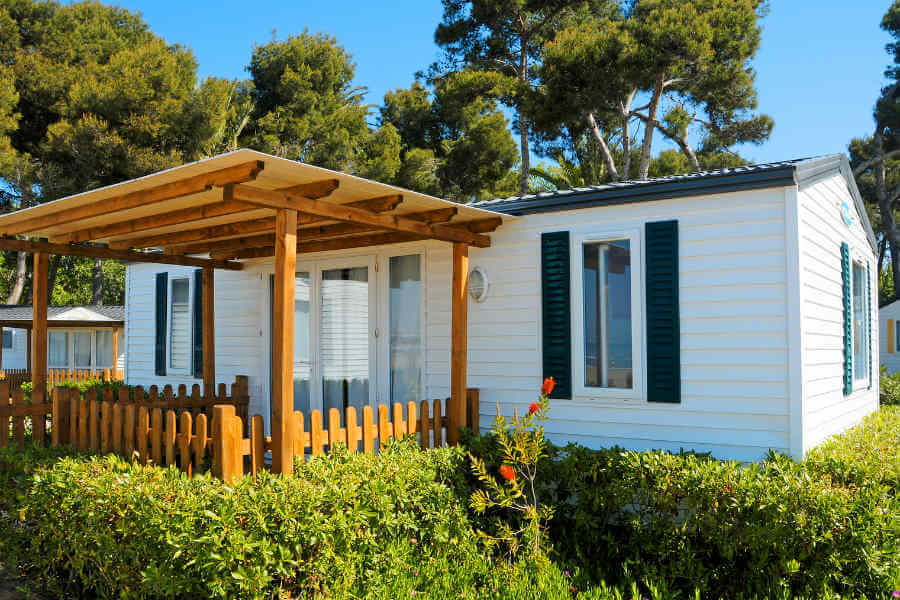
Mobile home

If you are looking to buy a home on a budget you may feel a little overwhelmed with questions.  What do I need to know? What should I read? Is there a mobile home buyer’s guide? Are mobile homes and modular homes the same things?  Where do manufactured homes come in?  Have no fear; we have put together a list of the important differences and distinctions of these types of homes.  In any home buying situation, do your research, choose your future home wisely and make sure you have enough insurance to protect your home and above all make sure you have home owners insurance and mobile home insurance coverage.

While many people use the phrases “manufactured home” and “modular home” interchangeably, the two are quite different.  When looking at your housing options it is important to know what type of home you are looking at and the differences between modular homes or manufactured/mobile home classification.

Another complication to the discussion is that many people think of manufactured homes and mobile homes as the same things; which they are, mostly.  Mobile homes are technically homes built prior to 1976 and HUD-established standards.  Mobile homes that were built after this time frame and adhere to the HUD regulations regarding design and durability are considered manufactured homes.  For our purposes, we will use the terms interchangeably.  Modular homes and manufactured/mobile homes, however, have some very distinct differences.

Code Regulations

A manufactured/mobile home is created and built at a factory and must meet federal building code regulations established by HUD (the Department of Housing and Urban Development).  These regulations are regularly reviewed and updated by HUD as needed.  While the initial regulations began in 1976, there were major additions to HUD’s standards in 1994 and 1999.  HUD established strict building codes in order to eliminate mobile home hazards due to poor construction.

A modular home is also made at a factory but must meet local or state regulations.  Modular home standards can vary based on locations, so research your local and state laws carefully prior to purchase.  Your contractor should already be familiar with these codes, but make sure that you obtain all necessary local and state permits and your home is built to code.

Assembly

Compared to a site-built home, a modular home is quite similar.  While a site-built home is constructed and put together in the lot of the home, a modular home is prefabricated in a factory and then assembled at the site of the home.

A manufactured home is built on a non-removable steel structure and transported to the destination site.  If there are multiple parts of the manufactured home, they will be assembled at the site.  These pieces are moved on wheels and the homes itself, even after assembly, may be mobile.  Depending on the home and location, the home may be attached to a permanent structure or it can be anchored to a more adjustable foundation.

Value and Pricing

Modular homes are most similar to traditional site-built homes.  Because of the way this type of home is made and assembled, the pricing and value is similar to a site-built home.  It may cost more to purchase a modular home than a manufactured one.  But your modular home has a better chance at retaining its value and appreciating over time.

Manufactured, or mobile homes, are less permanent structures.  These homes are quite a bit different than site-built homes.  Their pricing and value seem to reflect that.  They tend to be more much more affordable than site built or modular homes but can also depreciate in value.

Size and Structure

Modular homes are much closer to traditionally site-built homes in their permanent foundations.  This gives you have much more flexibility in the architectural design and customization available.  You can work with an architect to design your modular home and have it built to your specifications.  You have many more choices than you would with a mobile home.

Manufactured homes only vary in width.  You can purchase a single, double, or triple-wide home, but you can’t purchase a second-story mobile home.  While the basic design of a manufactured home can’t be modified, you can make customizations inside the home.  Due to the way these homes are constructed, mobile home remodeling is limited to the interior of the home.

Communities

Modular homes are generally more similar to traditionally built homes in that there are neighborhoods but less specific “park” focused communities.

Manufactured/mobile homes will typically be part of a mobile home park.  This community is made up of your neighbors and will have its own set of rules and regulations.  It is important to get to know your community and its rules prior to purchasing a home.  You can stop by a prospective mobile home park in Arizona and talk to the residents.  There are also reviews online designed to help you find the most enjoyable mobile home parks.  Each park will have its own rules and its own activities and resident events.

Regardless of the type of home you choose, make sure to work with an experienced insurance agent to protect your investment and belongings.   Choosing the perfect home will greatly depend on your needs.  Your budget, lifestyle and dream home design will all play a part in deciding which type of home is perfect for you.  Now that you know the differences between a modular home and a manufactured/mobile home classification, you are better equipped to decide which is best for you.

Filed Under: Mobile Home Insurance, Home Insurance Tagged With: Assembly, Code Regulations, Communities, Size and Structure, Value and Pricing

How Much Life Insurance Do You Really Need?

December 30, 2016 by Steve Gebhardt

Life preserver

Life insurance is an incredibly useful risk management tool. Like many other forms of insurance, it is used to help provide financial security for the “what ifs” of life. You need to weigh the amount of insurance you need against the amount you can afford. An insurance agent can be a useful resource in helping you determine an appropriate policy amount and help you shop around for the best price possible. Similar to insurance bundling to save money, an agent can comparison shop and adjust your policy to keep your premium costs down. Insurance companies will do their part to offer affordable rates in order to stay competitive with one another. While looking at the cost of life insurance is one side of the coin, the other thing to consider is how much life insurance you actually need.

Who Needs Life Insurance?

While no one likes to consider their mortality, accidents and disasters happen. Some of Casa Grande’s worst disasters include fires, dust storms, flooding and car accidents, all of which caused property damage and deaths. If you have children, elderly parents or any friend or relative that relies on you financially, you need life insurance. Could your spouse pay the bills without you? Are you helping your children pay for college? If you are the primary custodial parent providing care for your children, what will care cost if something should unexpectedly happen to you? Life insurance is a straightforward way to provide replacement income. The emotional loss of losing a loved one is an incredible burden to bear. Don’t compound that burden with financial strain as well. Without the proper planning, your family may have to sell their home, children may be forced to change schools or drop out of school and the quality of care for elderly dependent relatives may be negatively impacted.

Even if your children are self-sufficient adults and your spouse is financially stable, you may still need life insurance. If your estate is not large enough to cover the cost of funeral expenses, life insurance may be a good solution for you. At a minimum, you should have enough insurance to cover burial costs. The last thing you want to leave your loved ones with is a large funeral bill.

How Much Life Insurance Do You Need?

The amount of life insurance needed depends on your specific situation. The payout should include any long term financial obligations, existing debts and future expenses. If you have a mortgage or tuition to pay for, include these expenses when calculating the amount of insurance you need. If you do not have significant savings or assets in place, you need to carefully consider how much your loved ones will need to survive in the event of your death. You may want to include transitional funds earmarked for your spouse to further his or her education and obtain a higher paying job. Your family may not need your entire income to get by or may need additional funds to maintain their standard of living. Consider the quality of life you want for those you leave behind.

If you are a business owner, you should also calculate how much money your business needs to continue. If you want your business to move forward when you are gone, you need to assess what financial needs must be met. What would it cost to hire your replacement? Does your business have debts that should be paid off? If you haven’t already, put together a succession plan and evaluate the need for life insurance.

Weigh insurance against your existing estate. If you have assets that could be sold or a significant amount of money set aside, your loved ones may be able to use these assets as the needed income replacement. You should take into account savings and other possible streams of income, such as social security survivor’s benefits or rental income, when considering the amount of insurance you need.

What Are the Benefits of Life Insurance?

  • Peace of mind. When you have adequate life insurance, you will know that your loved ones are financially protected in the event of your untimely death.
  • Income replacement. Life insurance can help your family maintain their current lifestyle if you were to pass away unexpectedly.
  • Debt repayment. Your beneficiaries will be able to pay off existing debts and not be burdened with outstanding liabilities.
  • Life insurance is consistent and protected. With term insurance, your policy does not change in value based on the market or any other outside circumstances.  As long as you pay your premium, the terms of your policy do not change or lose value.
  • Your beneficiaries may be exempt from paying taxes. Depending on the type of life insurance you choose, your heirs may be able to receive your life insurance tax-free.

How to Get the Life Insurance You Need for a Price You Can Afford

Consult a professional. Work with an expert to review your individual needs. Every person will have specific circumstances that will increase or negate the need for life insurance. Life insurance will not be any help if you can’t meet your monthly premium obligation. An experienced life insurance agent can assess your situation and help you find the insurance you need within your budget.

Filed Under: Life Insurance Tagged With: Life Insurance Benefits, Life Insurance Cost

10 Widely Believed Mobile Home Myths

December 19, 2016 by Steve Gebhardt

Despite the presence of mobile homes across the country, there are still a lot of common misconceptions about these types of homes. If you are looking for an affordable path to home ownership, mobile homes have a lot to offer. We’re offering this debunking of widely believed mobile home myths to you as a guide to finding a new mobile home. We’ve also included some remodeling mobile home tips so that if you choose a mobile home, you can get the most out of it.

1.   Mobile Homes Are Easily Damaged

When people discuss mobile homes that are highly susceptible to damage, they are often talking about homes that were built pre-1976.  The US Department of Housing and Urban Development (or HUD) established safety guidelines and oversight of mobile homes in 1976.  These guidelines were revised again in 1994 and 1999, increasing safety standards even further. Older mobile homes that were built prior to HUD oversight may live up to the stereotype of being poorly built and easily damaged, but newer homes have more stringent standards. Mobile homes built to HUD code should be structurally sound and properly anchored, making them much more durable than their older predecessors.

2.   Mobile Homes Are Substandard

This is another myth that can be debunked. Newer homes, built to HUD standards, can in fact be used as long-term housing. This is because they are built with the same durable, reliable materials as traditionally-built houses. Mobile homes are regulated and approved by National Conference of States on Building Codes and Standards and HUD. Standards are strictly followed before any of these are sold to the public.

3.   They All Look Alike

While some manufactured homes resemble each other, they are not all similar in shape and sizes. Mobile homes are no more the same than traditionally built neighborhoods that utilize similar floor plans and structures multiple times. Mobile homes can be custom-made and remodeled to reflect a wide array of taste and styles. They come in a wide range of exterior and interior options and designs.There are manufacturers that make luxury mobile homes featuring walk-in closets, stonework fireplaces, hardwood floors, custom kitchen cabinets and wrap-around decks or porches.

4.   These Homes Lack Class

Beauty is in the eye of the beholder. While older mobile homes may need a new coat of paint or other types of TLC, you may also choose to purchase a newer, custom home that comes with luxury amenities and all the bells and whistles. Don’t be fooled by this stereotype. While mobile homes are generally more affordable than traditionally built homes, some are priced at $130,000 or more. A mobile home can be as classy as an owner wants to make it. Whether you remodel an existing home or customize it directly from the manufacturer, you can purchase a home you can be proud of.

5.   Mobile Homes Are Tornado Magnets

Don’t underestimate the strength and durability of mobile homes.They are designed and constructed to withstand tornadoes and strong winds. This myth may have originated because many mobile houses are located in places where tornadoes are common. A mobile home that is properly built and installed is no more likely to be damaged than its traditional counterparts.

6.   Mobile Homes Are Susceptible to Fire

Manufactured or mobile housing is as safe as site-built homes when it comes to withstanding fire and similar problems. To understand this myth, you first need to ask, “Why do mobile homes burn down?” The most common cause of fire is human error. If you have unsafe practices at home such as overloading outlets or neglecting smoke detectors you increase your odds of fire hazards. This is true in any home, mobile or otherwise.

7.   Mobile Housing Does Not Appreciate in Value

Depreciation and appreciation in value do not depend on whether your house is site-built or manufactured. Appreciation of any type of home is generally determined by location, proper maintenance and supply and demand.

8.   Mobile Homes Are Less Energy-Efficient

Times have changed and energy efficiency has been taken seriously now by mobile home manufacturers. The more recent mobile homes are being built with energy efficiency in mind.  Newer mobile homes often utilize energy-efficient lighting and windows. If you have an older home, you can always upgrade or remodel to make your mobile home as environmentally friendly and efficient as possible.

9.   These Homes Are Difficult to Finance

Manufactured homes were previously financed or purchased as personal property, making loans more difficult to obtain. Today, it’s easier to finance. They are now generally financed as real estate. There are programs like the Federal Housing Administration and Department of Veterans Affairs that offer loan insurance for these types of mortgages.

10. Mobile Homes Are Only for Low-Income People

This myth is not only wrong, but condescending as well. Mobile homes are just as durable, homey and reliable as traditionally-built houses. Stop by into some of the best mobile home park in Arizona and talk with the residents to give you insights that can help you decide.

If you’re convinced that these myths about mobile homes are inaccurate and are going to buy or already have a mobile home of your own, don’t forget to have it insured.

Filed Under: Mobile Home Insurance Tagged With: Easily Damaged, Look Alike, Substandard, Susceptible to Fire, Tornado Magnets

Frequently Asked Questions by Singles About Life Insurance

December 14, 2016 by Steve Gebhardt

If you are single, you may think life insurance simply doesn’t apply to you. Believe it or not, there are still some very good reasons to consider purchasing life insurance. If you do decide to pursue a life insurance policy, work with a skilled insurance agent to determine how much life insurance you need. Life insurance provides financial protection for your loved ones and peace of mind that the people you care about will be taken care of when you are gone.

1. If I’m Single, Do I Need Life Insurance?

The short answer is maybe. Life insurance is less expensive the younger and healthier you are. If you are single now but plan on having a family in the near future, getting life insurance now may not be a bad idea. In addition, there are several other strong reasons you need life insurance. If you do not have existing assets to cover the cost of funeral expenses, a life insurance policy can be an easy way to make sure your loved ones are not burdened with those expenses. If you have children, elderly parents or anyone that relies on you financially, life insurance can be much needed income replacement.

2. What is the Right Age to Get Life Insurance and What are Other Options?

There are many things to consider when trying to determine when to get life insurance. Life insurance for the elderly or retirees can be more difficult to get and more expensive. The younger and healthier you are, the cheaper life insurance usually is; however, that doesn’t mean you should purchase it right away. If you do not have any hereditary or medical issues that would make insurance an immediate need, assess your current situation. If you have money set aside that can be used for funeral expenses and no one else is financially dependent on you, life insurance may be something you can do without. Instead, focus on putting money away towards saving and retirement accounts. Life insurance offers excellent financial protection in the event of a death but is not generally the wisest investment vehicle.

3. How Much Life Insurance Do I Need?

The amount of life insurance greatly depends on your current situation. You should have enough insurance to pay off all existing debt and replace your income for anyone that depends on you financially. If you have children, consider their ages and how much it will cost to help support them until adulthood. If your parents are elderly and rely you on you to pay for their care, this should be factored in as well. At a minimum, your insurance amount should cover your burial costs and any existing debt. At a maximum, it can also cover the cost of maintaining quality of life for your loved ones. Work with a Casa Grande life insurance expert to determine the best amount of coverage for your needs.

4. What Types of Life Insurance Are Available?

There are many different types of life insurance available, although the two largest categories are term and permanent insurance. Term insurance is a policy where you pay a set monthly premium in return for a guaranteed set payout if the insured party dies within a designated time frame. The downside to term insurance is if the insured does not die during that period, you forfeit all the premiums that are paid. This is why term insurance is usually less expensive than other types of insurance.
Permanent insurance works very differently. The premiums tend to be much higher but permanent insurance has a cash value component. Permanent insurance provides a death benefit as well as cash savings as long as you pay your premiums. There are many versions of permanent insurance, including variable, universal, whole-life and universal indexed. Each type varies slightly and may suit your needs depending on your situation and goals. Work with an experienced agent to go over each option in-depth.

5. Can I Use Life Insurance as an Investment?

Permanent life insurance may have an investment component to it. You should carefully weigh the costs and benefits against the cost of other investment opportunities. If you are looking for life insurance protection as well as an investment vehicle, certain types of permanent insurance might be a good fit for you.

6. What Are Policy Riders?

Policy riders are add-on provisions to a standard policy. Riders are typically added for an additional cost. For instance, long-term care (LTC) is often added to a life insurance policy. A LTC rider can include financial reimbursement for long-term care if you ever need it. If you need treatment in a care facility or have an in-home care provider tend to you, a long-term care rider can help you cover the costs. If you have specific or unusual coverage needs, a specific rider may provide a solution for you.

7. Can I Purchase Life Insurance for My Children?

Yes, you can. If you have children, you may want to purchase life insurance for them. This insurance money could be used in the event of their untimely death to cover burial and funeral expenses. While this is an incredibly unpleasant topic, it is a valid protection to consider. Children are typically automatically rated. Assuming there are no major health issues when your child reaches the age of 18, contact your insurance provider and have him or her re-rated for better rates.

8. Can I Get Life Insurance Through My Employer?

Many employers offer life insurance benefits. Take advantage of this policy if it is offered. Keep in mind though, if you leave your job or retire you will lose your life insurance and plan accordingly. Depending on your debt and financial obligations it may be in your best interest to obtain a supplemental policy, just in case.

9. How Are Life Insurance Premiums Calculated?

There are many factors that insurance companies consider when determining your rates. Your age, health and statistical data are all used when assessing your risk. Insurance providers will often require a medical exam and questionnaire asking about your health history and family history to assess your risk. The higher the likelihood that an insurance company will have to pay out, the higher your premiums.
Life insurance provides a much-needed protection for you and your loved ones. Whether you are singled, married or divorced, carefully consider the benefits of life insurance and if it is right for you. If you have additional questions, please don’t hesitate to contact a licensed agent that can explain the benefits and many types of insurance available.

Filed Under: Life Insurance Tagged With: Investment, Singles, Types of Insurance

« Previous Page
Next Page »

Recent Posts

  • Can Golf Carts Be Driven on the Road in Casa Grande? Complete 2025 Guide
  • Complete Insurance Checklist for Snowbirds & Winter Visitors in Casa Grande & Maricopa, Arizona
  • Golf Cart vs Side by Side Insurance in Casa Grande & Maricopa: Which Coverage Do You Really Need?
  • Why Casa Grande Residents Should Choose a Local Independent Agent: 5 Advantages You Can’t Get Online
  • Common Insurance Scams in Arizona: How to Protect Yourself and Your Coverage
logo-main-white

719 E Cottonwood Lane, Suite #1
Casa Grande, AZ 85122

44400 Honeycutt Rd, Suite #102H
Maricopa, AZ 85138

Facebook Twitter Feeds
5 star yelp

Insurance Types

Motorcycle Insurance
Motorhome Insurance
Mobile Home Insurance
Life Insurance
Medicare Insurance
Home Insurance
Commercial Insurance
Auto Insurance

Our Company

Careers
Contact Us
File a Claim

Recent Posts

Driving Safely in Monsoon Season
What Does Church Insurance Cover?
Surety Bond vs. Insurance: Which One Is Better?
3 Best Supplement Insurance for Medicare 2021

Copyright © 2024. By GEBHARDT INSURANCE GROUP | PRIVACY POLICY

Accessibility

Online Dictionary

    Readable Experience

    Content Scaling
    Default
    Text Magnifier
    Readable Font
    Dyslexia Friendly
    Highlight Titles
    Highlight Links
    Font Sizing
    Default
    Line Height
    Default
    Letter Spacing
    Default
    Left Aligned
    Center Aligned
    Right Aligned

    Visually Pleasing Experience

    Dark Contrast
    Light Contrast
    Monochrome
    High Contrast
    High Saturation
    Low Saturation
    Adjust Text Colors
    Adjust Title Colors
    Adjust Background Colors

    Easy Orientation

    Mute Sounds
    Hide Images
    Virtual Keyboard
    Reading Guide
    Stop Animations
    Reading Mask
    Highlight Hover
    Highlight Focus
    Big Black Cursor
    Big White Cursor
    Navigation Keys

    Casa Grande Insurance Agency Accessibility Statement

    Accessibility Statement

    • www.gebhardtinsurancegroup.com
    • January 31, 2026

    Compliance status

    We firmly believe that the internet should be available and accessible to anyone, and are committed to providing a website that is accessible to the widest possible audience, regardless of circumstance and ability.

    To fulfill this, we aim to adhere as strictly as possible to the World Wide Web Consortium’s (W3C) Web Content Accessibility Guidelines 2.1 (WCAG 2.1) at the AA level. These guidelines explain how to make web content accessible to people with a wide array of disabilities. Complying with those guidelines helps us ensure that the website is accessible to all people: blind people, people with motor impairments, visual impairment, cognitive disabilities, and more.

    This website utilizes various technologies that are meant to make it as accessible as possible at all times. We utilize an accessibility interface that allows persons with specific disabilities to adjust the website’s UI (user interface) and design it to their personal needs.

    Additionally, the website utilizes an AI-based application that runs in the background and optimizes its accessibility level constantly. This application remediates the website’s HTML, adapts Its functionality and behavior for screen-readers used by the blind users, and for keyboard functions used by individuals with motor impairments.

    If you’ve found a malfunction or have ideas for improvement, we’ll be happy to hear from you. You can reach out to the website’s operators by using the following email

    Screen-reader and keyboard navigation

    Our website implements the ARIA attributes (Accessible Rich Internet Applications) technique, alongside various different behavioral changes, to ensure blind users visiting with screen-readers are able to read, comprehend, and enjoy the website’s functions. As soon as a user with a screen-reader enters your site, they immediately receive a prompt to enter the Screen-Reader Profile so they can browse and operate your site effectively. Here’s how our website covers some of the most important screen-reader requirements, alongside console screenshots of code examples:

    1. Screen-reader optimization: we run a background process that learns the website’s components from top to bottom, to ensure ongoing compliance even when updating the website. In this process, we provide screen-readers with meaningful data using the ARIA set of attributes. For example, we provide accurate form labels; descriptions for actionable icons (social media icons, search icons, cart icons, etc.); validation guidance for form inputs; element roles such as buttons, menus, modal dialogues (popups), and others. Additionally, the background process scans all of the website’s images and provides an accurate and meaningful image-object-recognition-based description as an ALT (alternate text) tag for images that are not described. It will also extract texts that are embedded within the image, using an OCR (optical character recognition) technology. To turn on screen-reader adjustments at any time, users need only to press the Alt+1 keyboard combination. Screen-reader users also get automatic announcements to turn the Screen-reader mode on as soon as they enter the website.

      These adjustments are compatible with all popular screen readers, including JAWS and NVDA.

    2. Keyboard navigation optimization: The background process also adjusts the website’s HTML, and adds various behaviors using JavaScript code to make the website operable by the keyboard. This includes the ability to navigate the website using the Tab and Shift+Tab keys, operate dropdowns with the arrow keys, close them with Esc, trigger buttons and links using the Enter key, navigate between radio and checkbox elements using the arrow keys, and fill them in with the Spacebar or Enter key.Additionally, keyboard users will find quick-navigation and content-skip menus, available at any time by clicking Alt+1, or as the first elements of the site while navigating with the keyboard. The background process also handles triggered popups by moving the keyboard focus towards them as soon as they appear, and not allow the focus drift outside of it.

      Users can also use shortcuts such as “M” (menus), “H” (headings), “F” (forms), “B” (buttons), and “G” (graphics) to jump to specific elements.

    Disability profiles supported in our website

    • Epilepsy Safe Mode: this profile enables people with epilepsy to use the website safely by eliminating the risk of seizures that result from flashing or blinking animations and risky color combinations.
    • Visually Impaired Mode: this mode adjusts the website for the convenience of users with visual impairments such as Degrading Eyesight, Tunnel Vision, Cataract, Glaucoma, and others.
    • Cognitive Disability Mode: this mode provides different assistive options to help users with cognitive impairments such as Dyslexia, Autism, CVA, and others, to focus on the essential elements of the website more easily.
    • ADHD Friendly Mode: this mode helps users with ADHD and Neurodevelopmental disorders to read, browse, and focus on the main website elements more easily while significantly reducing distractions.
    • Blindness Mode: this mode configures the website to be compatible with screen-readers such as JAWS, NVDA, VoiceOver, and TalkBack. A screen-reader is software for blind users that is installed on a computer and smartphone, and websites must be compatible with it.
    • Keyboard Navigation Profile (Motor-Impaired): this profile enables motor-impaired persons to operate the website using the keyboard Tab, Shift+Tab, and the Enter keys. Users can also use shortcuts such as “M” (menus), “H” (headings), “F” (forms), “B” (buttons), and “G” (graphics) to jump to specific elements.

    Additional UI, design, and readability adjustments

    1. Font adjustments – users, can increase and decrease its size, change its family (type), adjust the spacing, alignment, line height, and more.
    2. Color adjustments – users can select various color contrast profiles such as light, dark, inverted, and monochrome. Additionally, users can swap color schemes of titles, texts, and backgrounds, with over 7 different coloring options.
    3. Animations – epileptic users can stop all running animations with the click of a button. Animations controlled by the interface include videos, GIFs, and CSS flashing transitions.
    4. Content highlighting – users can choose to emphasize important elements such as links and titles. They can also choose to highlight focused or hovered elements only.
    5. Audio muting – users with hearing devices may experience headaches or other issues due to automatic audio playing. This option lets users mute the entire website instantly.
    6. Cognitive disorders – we utilize a search engine that is linked to Wikipedia and Wiktionary, allowing people with cognitive disorders to decipher meanings of phrases, initials, slang, and others.
    7. Additional functions – we provide users the option to change cursor color and size, use a printing mode, enable a virtual keyboard, and many other functions.

    Browser and assistive technology compatibility

    We aim to support the widest array of browsers and assistive technologies as possible, so our users can choose the best fitting tools for them, with as few limitations as possible. Therefore, we have worked very hard to be able to support all major systems that comprise over 95% of the user market share including Google Chrome, Mozilla Firefox, Apple Safari, Opera and Microsoft Edge, JAWS and NVDA (screen readers), both for Windows and for MAC users.

    Notes, comments, and feedback

    Despite our very best efforts to allow anybody to adjust the website to their needs, there may still be pages or sections that are not fully accessible, are in the process of becoming accessible, or are lacking an adequate technological solution to make them accessible. Still, we are continually improving our accessibility, adding, updating and improving its options and features, and developing and adopting new technologies. All this is meant to reach the optimal level of accessibility, following technological advancements. For any assistance, please reach out to