File a Claim

Make a Payment

Facebook Twitter Feeds
logo-main-white
  • Home
  • About Us
    • Our Insurance Carriers
    • Careers
  • Insurance Types
    • Auto Insurance
    • Bonds
    • Commercial Insurance
    • Churches Insurance
    • Home Insurance
    • Life Insurance
    • Medicare Insurance
    • Mexico Insurance
    • Mobile Home Insurance
    • Motorcycle Insurance
    • Non-profit Insurance
    • Renters Insurance
    • Insurance for Snowbirds Arizona
    • Golf Cart Insurance
  • Locations
    • Casa Grande
    • Maricopa
  • Blog
  • Contact Us
  • Get Free Quote
Text or Call Us Today!
520-836-3244

Author: Steve G

Insurance blog, articles, and news written by Stephen Gebhardt, founder and CEO of Gebhardt Insurance Group an Insurance agency in Casa Grande, Arizona.

Someone Hit My Parked Car

June 21, 2018 by Steve Gebhardt

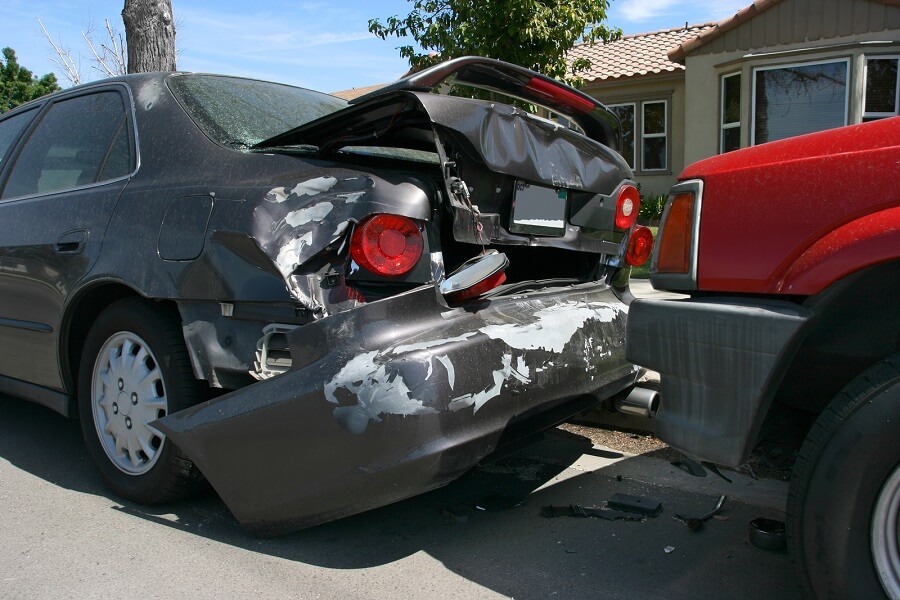
Damaged Parked Car

Car accidents are never a good situation for anyone involved. While most people think of car accidents as happening at high speeds on the road, it’s just as common to have your parked car hit in a parking lot. Even worse, some people don’t bother to leave their information, making it a hit and run situation. The costs of repair can be covered by a combination of collision and uninsured motorist coverage, but you may also owe a deductible. No matter what happened, there are a few essential steps for properly handling this situation.

When someone hits a parked car, they are responsible for making contact with the vehicle owner. They must either wait for the owner to return to their car or they must leave a note with their personal contact information, insurance information and a description of what happened. All of this info can be used later by the person who was hit to contact the perpetrator and file a claim with their insurance. The perpetrator does not need to contact the police, however, if no one was hurt in the accident.

When someone hits a parked car and they do not leave information or make contact with the owner, it becomes a hit and run situation. This is against the law and causes much more trouble for the perpetrator if they are ever caught. In an event such as this, you must call the police and file an official report. This will put it on record that a hit and run occurred and the police can do what they can to find the driver. The police may even be able to obtain video from the nearby businesses who may have cameras aimed at the parking lot.

No matter what happens, it is important to document everything about the accident. Take photos of the damage as well as your vehicle’s location in the parking lot. If you caused the accident, be sure to leave your information or speak directly to the owner of the parked car. If it is a hit and run, be sure to call the police and file a report. The more information that is available, the quicker and smoother the claims process will go with the insurance carrier.

Filing a claim with your insurance in this situation is much like any other accident that occurs on the road. They will need the date and time, the location of the incident, photos of the damage, as much contact information as possible from the perpetrator, and the police report if one has been filed. Fortunately, most insurance companies offer coverage options that can take care of the vehicle repairs when your car is hit in a parking lot, whether it is a hit and run or not.

Some drivers worry that filing a claim for any reason will raise their rates. Not all incidents will cause that to happen, and it can actually be costlier to not report an accident in the long run. There are also many ways to save more on your car insurance whether you need to file a claim or not.

There are mandatory insurance requirements that state that all drivers must have certain types of coverage. If the other driver does not have insurance, or not enough to cover the bills, the claim could be filed as an uninsured or underinsured motorist claim. This also applied in a hit and run event, as the insurance company must assume there is no coverage because there is no way of contact anyone and obtaining their insurance information. These policies will cover most or all of a repair, usually after a small deductible is paid. Collision coverage is another policy that can be utilized for covering repairs. You may owe a deductible based on your policy, but after that, the rest of the bill will go to the insurance company, up to your collision coverage limits.

Sometimes a parking lot hit causes major damage to the point of disrepair of your car. In events like this, insurance may be able to “total” the car and provide you with money to purchase a new one. If the insurance company can inspect the vehicle and determine that it would cost more to repair the damage than it would to buy a different vehicle, they will give you money to buy a different car. Depending on your specific policy, they may even provide you with enough money to buy a better car than you owned before.

Returning to a damaged car in a parking lot is not an idea situation, but it doesn’t have to be as scary and frustrating as it seems. Do what you can to make contact with the perpetrator, file a police report if necessary, and file a claim with your insurance. Be sure to document everything you can, from photos of the damage to contact information of the other party and police records. Events like this are why we have insurance in the first place.

Filed Under: Auto Insurance Tagged With: Parked Car Accident Insurance Claim, Parked Car Accidents

Facts You Need To Know About Mobile Home Insurance

June 7, 2018 by Steve Gebhardt

Facts About Mobile Home Insurance

Mobile homes (also known as manufactured homes) are just like regular houses in terms of maintenance and homeowners insurance. Property and liability insurance policies are standard coverages for a mobile home, but additional coverages may also be necessary. Replacement cost coverage can help an owner protect against depreciated value of the home. “Stated Amount” is a specific total in an insurance policy that states the maximum amount of money that can be paid out for any damages to a mobile home. These are all aspects of insurance coverage that must be considered when insuring a mobile home.

Firstly, a mobile home is typically manufactured off-site and later delivered to the plot of land where it will be located for good. During this delivery, however, the home is not covered under a homeowners insurance policy. It is important for the buyer of the home to work with the manufacturers and delivery service to ensure that the home is insured against damage during delivery. No matter the distance the home will travel, it will be at risk of damage and should be insured. Once the home is in place, typical homeowners insurance can be put into place.

Property coverage is a standard type of insurance policy for all kinds of houses, including mobile homes. This policy covers the broadest amount of situations that could arise for a homeowner. These includes bad weather (hail, lightning, etc), theft (stolen items), vandalism (destruction / defamation of property), and fire. Depending on what else you own, you may need property coverage for a carport, porch or gazebo on the property as well. These are not automatically placed on a property insurance policy.

Some insurance companies offer limited coverage which result in a lower premium, but it is important to know exactly what will and will not be covered by these types of policies. Lower cost coverage may be convenient for their lower monthly cost, but it can also be costly if a specific incident occurred and it is not covered by the policy. Look at the details of the policy before agreeing to a low cost insurance plan for your mobile home.

Liability coverage is another common policy that many homeowners have on their mobile home. Liability mainly protects the owner against situations where others are injured while on their property. This usually covers situations where something in the home breaks and hurts a visitor, or if someone were to slip and fall inside the house. Usually it does not cover medical bills for those who live in the home and are injured. However, it usually does cover the costs that you incur if you damage a neighbor’s home or property.

An important consideration for mobile home owners is the possibility of water damage. Pipes can burst inside of any home, but are more susceptible in a manufactured home due to its smaller size and ventilation. Insurance companies offer coverage for water damage and broken pipes only in the event that the damage occurred naturally. If the damage occurred due to the owner’s bad maintenance, coverage would be denied. It is important to take extra care of the pipes in a mobile home to ensure that, if damaged, they will be covered by insurance.

Replacement cost coverage is a unique type of policy for mobile homes. This coverage protects you financially against depreciated value of the home. If part of the home is damaged, replacement cost coverage will provide enough money to replace what is needed, rather than providing money based on the current value. In this case, you will have enough money to replace the damaged areas rather than simply repair them.

This also ties into the “Stated Amount” in the policy. The Stated Amount is a specific grand total of how much the insurance company will pay out if everything were to be destroyed. It is important to know this number in the event that you need full replacement of the home and possessions. Owners must consider how much it would cost to start over with a new home.

Insuring a mobile home is very similar to insuring a house, but with a few extra considerations. Property and Liability insurance are standard coverages that protect you against most common scenarios. Make sure you take good care of the pipes and have good water damage coverage. It is important to have replacement cost coverage if you will need to replace large parts of the property at any time. Taking good care of your mobile home starts with quality insurance.

Filed Under: Mobile Home Insurance Tagged With: Liability Coverage, Manufactured Homes, Property Coverage

Why Arizona Auto Insurance Rate have gone up?

May 25, 2018 by Steve Gebhardt

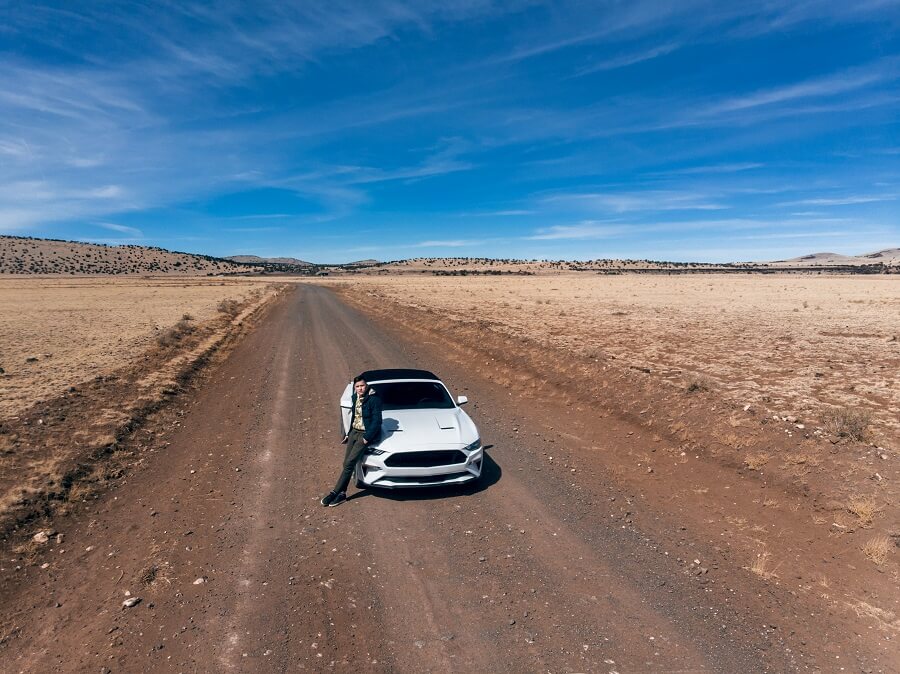
Man Traveling By Car On The Desert Road

The average amount that people in Arizona pay for their car insurance is about $133 per month. People who are known to have a lot of car accidents will have to pay a higher rate like around $300 per month. In the past, people with clean driving record’s tend to pay less, but that is not the case in the future. Based on statistics and careful analysis, Arizona drivers could be paying more for their car insurance in the future the very reason why you should know what to look in an auto insurance. A bill at the Arizona legislator could increase car insurance cost for drivers. This can severely impact the insurance industry. State Senate Kate Brophy- McGee has introduced a bill that will increase liability coverage for drivers in Arizona. It will increase the minimum liability coverage from $15,000 per individual to $25,000, and the average accident coverage will be between $30,000-$50,000. This will ultimately raise the drivers premium by $80 per year. Unfortunately, there is a fear that high auto insurance cause might lead to more uninsured drivers.

Reasons why the auto insurance cost has gone up in Arizona for the past couple of years:

Increase accident rates

For the past two years, the severity of the car accidents has gone up. After all, people love to text and drive at the same time. For example, there has been a 12% increase in bodily injury, and 15% increase in the cost of the collision. This can be very costly and detrimental to the auto insurance industry. To make matters worse, the rate of fatality has also gone up. Insurance companies have to take responsibilities and paid those rates, that is why they decided to increase driver’s premium rate. They have to raise their rates high enough to compensate for the 12% to 20% increase in automobile accidents.

Cars cost more than they used to

Car prices have increased over the past years. If there are more car accidents combining with the fact that cars are costing more each year, then that means the cost of the accident will rise tremendously. That would also mean that the insurance company will have to pay more. This is why insurance rates in Arizona are getting higher every year.

DUI and speeding tickets have gone up

There have been reports that DUI and speeding tickets have gone up in the state of Arizona. When people drive under the influence or speed through the road, they are very prone to accidents. This results in severe crash and fatality. This can be very costly for the insurance company. Plus, even if there is no crash, a speeding ticket or a DUI can raise the driver’s insurance rate. Because of these reckless driving, the insurance company will have to elevate their premium rates in order to compensate for the rise in DUI and speeding tickets.

Arizona gas price has dropped

The gas price in Arizona is lower than other states. The greatest part is that; the gas price has been dropping over the course of the years. The low gas prices will result in more people getting in the car and driving. If we combine that with social media impact, then you have a wonderful multitasking driver. The increased rate of driving and texting can result in a collision. This would be why insurance companies in Arizona have experienced a high premium rate.

Even if you are an amazing driver and obey every stop signs, your insurance rate will still go up. Since 2012, practically all insurance companies have increased their rates. The consumer price index for auto insurance has gone up by 21.5% in comparison to the CPI which is 4.5% over the same five-year period. Keep in mind that auto insurance is not doing this to be mean, but the rise in car accident rates and fatality have taken a lot of money out of their pockets. They have no choice but to raise driver’s premium rate in order to compensate for the cost. Keep in mind that even if you have an excellent driving record, but a friend of yours who have gotten an accident and uses the same insurance company can also affect your rate. At the end of the day, it’s important to talk to a various insurance company and compare their rates. At Gebhardt, Insurance agents are very knowledgeable about the statistics and the rise of car insurance premium. They can provide you with all the information you need to make an informed decision. They can also go above and beyond to find the proper premium rate that you can be happy with.

Filed Under: Auto Insurance Tagged With: Arizona Auto Insurance Rate, auto insurance cost

What Are The Mandatory Insurance Requirements in Casa Grande, Arizona?

May 18, 2018 by Steve Gebhardt

Mandatory Insurance Requirements

You’re a cautious driver and you do your best to respect the law and keep everyone in the car safe.

But accidents aren’t always your fault. There are factors you can’t control. For situations like this, car insurance helps you cover hefty medical bills and damages.

The leading cause of car accidents are alcohol consumption, texting, distracted driving, and weather issues.

According to Forbes, the average American is involved in a car accident every 19 years.

In Arizona, the car insurance policy consists of six layers of coverage. Some states require all of them. However, in Arizona only two types of coverage are needed to reach the minimum requirements: $15,000 for bodily injuries for one passenger or $30 000 for more than two and $10,000 worth of coverage in damages caused to property.

Here’s a quick look at all of the types of coverage and common car insurance problems, as well as a groundbreaking car insurance innovation.

Types of Coverage in Arizona

If you cause bodily injuries to someone in a car accident, you’re required by law to have a policy that covers at least 15,000 per person and $30,000 per car crash. In the state of Arizona if you cause damage to somebody’s property, your policy must take care of at least $10,000 in damages.

Almost all car accidents lead to damages to other cars or the driver’s vehicle. Collision insurance is very important, yet it’s not part of the minimum requirements.

There is also the option for medical bills that aren’t covered by health insurance, in case you or any passengers suffer injuries.

A comprehensive insurance covers damages to your car that weren’t caused by crashing into another vehicle. For example, these include scenarios where someone vandalizes your car or you accidently hit an animal crossing the street. This type of insurance is sometimes required if you’re using a loan to pay off a car.

Auto Insurance in Casa Grande

If you’re looking for auto insurance in Casa Grande, it’s not a bad idea to learn about what determines the price of insurance, as well as a few of the latest car insurance innovations that can give you customized solutions.

Before you will receive a quote, all of your history linked to driving and owning a vehicle will play an important role in estimating your insurance costs.

For example, your age, the type of car you drive, your driving history, and the number of years you’ve been driving are a few of the factors that will influence how much you will pay out of pocket each month.

A responsible driver that happens to be in their teens and drives an expensive sports car will pay more than someone in their 30’s who drives an inexpensive vehicle and has no history of car crashes.

One of the factors that drive down rates the most is a clean driving record. This includes no speeding tickets, collisions, or law-breaking behaviors behind the wheel.

If you’re looking for affordable premiums, you might need to speak with a specialist about it. Going by yourself and asking for quotes from insurance companies will cost you more in the long run.

Skilled insurance agents have at least 30-40 insurance companies to choose from. Plus, they have leverage when it comes to being familiar with the legislation, and they bring clients to these companies. In other words, you don’t bring as much money to these companies as insurance agents do. An agent can demand a discount, but you don’t have any grounds to do that as a one-time client.

Our Casa Grande agents can help you find out if you’re eligible for deductions as well.

Most Common Auto Insurance Problems

You may be thinking that you’re saving money by driving without insurance. But in the long-term, you’re risking fines, the suspension of your license, and a certificate that will identify you as a high-risk driver.

This will not only make you look bad in the eyes of the law, but insurance companies will raise their rates due to your status.

Driving underinsured leads to similar issues. An insurance plan that doesn’t cover the minimum requirements is one of the most common auto insurance problems, as drivers believe the consequences for this are minor.

Drivers who don’t own the car they’re driving also face penalties if they don’t have insurance. Fortunately, among the latest car insurance innovations is temporary insurance as well. You can buy car insurance even for one hour by using an online application and a debit card.

Filed Under: Auto Insurance Tagged With: car accident, Types of Coverage

The Latest Car Insurance Innovations for Consumers

May 16, 2018 by Steve Gebhardt

Couple signing insurance papers

The insurance industry is evolving, in real palpable ways, making it easier for insurers to get their claim settlements and determine their car crash risk by using technology.

With over 1 million of deaths caused by car crashes every day, and 20-50 million left with disabilities and injuries, there’s no doubt that the insurance industry is getting busy trying to make progress towards helping people more.

Prevention still plays an important part. While there are factors you can’t control (e.g., weather, car defects, and other driver’s behavior), there also dangerous behaviours you can avoid.

For example, around 50% of fatalities are caused by alcohol consumption. In the last few years, texting and consumption of marijuana were the leading cause of car accidents.

How Does Car Insurance Work?

Due to high risks, not buying car insurance isn’t even an option. You may want to save a few pennies, but even the best drivers can get into car wreck. If you want to find out how car insurance works, read on.

Insurance and finance companies aren’t the people who determine if you should have insurance or not. The government does, and there are specific laws made for each state that outline the minimum requirements for insurance.

For example, let’s take this scenario. If you are moving from Texas to Arizona, you have to check to see if your insurance meets your new location’s minimum requirements.

In Arizona, car insurance starts at $15,000 per person (injuries) and $30,000 per accident. However, covering only the minimum requirements is not enough most of the time.

If you want to bring your premiums down, you need to work with someone who knows the laws and can negotiate your plan without making big compromises. While it’s easy these days to get insurance online, it’s also far more expensive.

A skilled insurance agent has at least 30-40 insurance companies that he or she is in contact with, as well as the connections, negotiation skills, and legal knowledge needed to create customized plans at a lower price.

Agents can easily negotiate an inexpensive insurance plan, as they buy from the same companies all the time and their loyalty is rewarded. But if you try to go by yourself and negotiate directly, you are simply a new customer that doesn’t bring much business.

How Technology Can Calculate the Risk of Getting in a Car Crash

Statistics are already used by insurance companies to determine prices for plans.

For example, if you are a 20 year old man who drives a sports car, you will pay more than a 40 year old woman driving a sedan.

Why does this happen? Based on statistics, women and drivers that have more experience on the road are less likely to be involved in car crashes.

But you may be thinking that generalizations negatively impact the exceptions to the rule.

For people like this, there are sensors that record driving habits to determine what kind of insurance they need. These devices will create a record of your driving habits, and based on this they will get either a higher or a lower insurance plan.

Insurance Plans for Rental Cars

Since public transportation is sufficient in most cities, many drivers prefer to use a car occasionally, not on a daily basis.

Cuvva launched an application that helps drivers who use a borrowed car buy insurance, even for as little as an hour, directly from their app.

To get started, all you need is a smartphone and a photo of the car that you intend to use.

Quick Payments

Allstate is a company that eliminates the notion of a claims check and saves you time by sending money directly to your card. The only downside is that you need a Mastercard for this to work.

The process is quite simple. You can sign up for this service using a Mastercard debit card and your email address. After you negotiate the claim with the insurance company, you will receive the money almost instantly.

Since everyone else stopped sending checks, it looks like the insurance industry is adapting as well.

Why Picking the Right Insurance Should Be near the Top of Your List of Priorities

You may think that a car crash will never happen to you, simply because you are a good driver. Unfortunately, there are factors you cannot control.

Speeding and being under the influence of drugs and alcohol aren’t the only dangerous behaviors that lead to the majority of car accidents. In fact, there are over 25. For instance, did you know that driving during the night is on the list?

For more information about how you can get car insurance at casa grande, feel free to contact us or leave a comment below.

Filed Under: Auto Insurance Tagged With: Car Crash Technology, Car Insurance Innovation, Car Insurance Quick Payments

Who is at Fault for a Parking Lot Car Accident

April 26, 2018 by Steve Gebhardt

white car damaged on a parking lot car accident

Parking lots are often busy areas packed with vehicles, pedestrians, bicyclists and other objects. These lots may have tight parking spaces and obstacles such as large ground-based concrete polls, shopping cart corrals, and permanent light poles.

A parking lot accident can involve a crash between multiple vehicles, a vehicle and a fixed object, or a vehicle and victim, like an individual or a cyclist. Some crashes may even combine several of these factors. Just like on the road, there are a number of factors that affect who is at fault when an accident takes place in a parking lot. Many drivers may find the rules confusing, but just like our highways, parking lots have right-of-way rules.

The Rules

Here are some general guidelines regarding parking lot accident fault:

  • The vehicles in the “through lanes” (cars in the traffic lanes) have the right of way. If a driver pulls out of a parking space and collides with a vehicle traveling in the through lane, the driver pulling out will probably be deemed at fault for the accident.
  • Drivers leaving a parking space must yield to any other oncoming traffic.
  • If you are driving your vehicle, and you collide with a legally parked car, you are at fault. However, if the car is parked illegally, the driver of the other car could be at fault.
  • You must obey all traffic signs while in a parking lot. You are automatically at fault if you are in an accident as a result of failing to follow the directions of a traffic sign in the parking lot, such as a stop or yield sign.
  • If you open your car door and hit another vehicle, you are at fault for any damage.

In most instances, these accidents will be minor since the automobiles are usually traveling at a slow speed, and as a result, will not lead to anything more than frustration. But in other situations, a driver or passenger may be hurt and may be in need of medical help. Regardless, when parking lot accidents are found to be your responsibility, they can raise your auto insurance rates.

Why Fault Matters

Determining fault is important in parking lot accidents since it plays an important role in whether your car insurance policy will cover damage to the vehicles and for any personal injuries that occur.  Liability insurance is a requirement for automobile drivers in Arizona. It helps pay for the harm done to individuals and to any property damage sustained by other drivers in an accident for which you are found at fault.

It can often be very difficult to place who is to blame for a collision in a parking lot car accident. That is why it is essential you have a proper insurance policy. Being insured not only protects you and your vehicle, it also safeguards the people and property around you. If you have been involved in a parking lot car accident, contact your insurance company as soon as possible. They can help with the arrangements to get your claim started and your car repaired as soon as possible.

Fault of Another Driver

It may occur that you come out to your car after shopping at the grocery store, mall or after work and find your car has been hit and damaged. According to Arizona law, drivers, who hit a parked car, must stop and do either of the following:

  1. locate the owner of the parked car to provide their name and address; or,
  2. leave a conspicuous note that provides their name and address.

A violation of this statute has serious repercussions or the person leaving the scene. If this situation happens to you, contact your insurance company and advise them of the circumstances. Be sure to document the situation as follows:

  • Record any damage by taking photos
  • Note the location of the incident
  • Write down the date and time of the accident

Driver Beware

If you are concerned about getting into a parking lot car accident in the first place, keep these driving tips in mind:

  • Drive slowly
  • Be aware of your surroundings
  • Stay alert for cars, bikes, and pedestrians cutting across parking lanes
  • Look in both directions before backing out of a parking space instead of relying on a mirror or rearview camera
  • Park in spots farther away from a store in order to avoid traffic

Experience Counts

At Gebhardt Insurance, we know that you have many options for insurance providers. For over 14 years we have been independent insurance specialists. Instead of selling our own insurance coverage, we shop the nation’s top carriers to find you the absolute lowest auto insurance rates. But we don’t stop there. We regularly review your coverage and help you receive the best value for your insurance dollar, all while providing the best customer service in the business.

Contact us now at 520-445-4929 to learn more or get a free quote online.

Filed Under: Auto Insurance Tagged With: car accident, Parking Lot Accident

5 Car Maintenance Tips to Prevent an Accident

April 24, 2018 by Steve Gebhardt

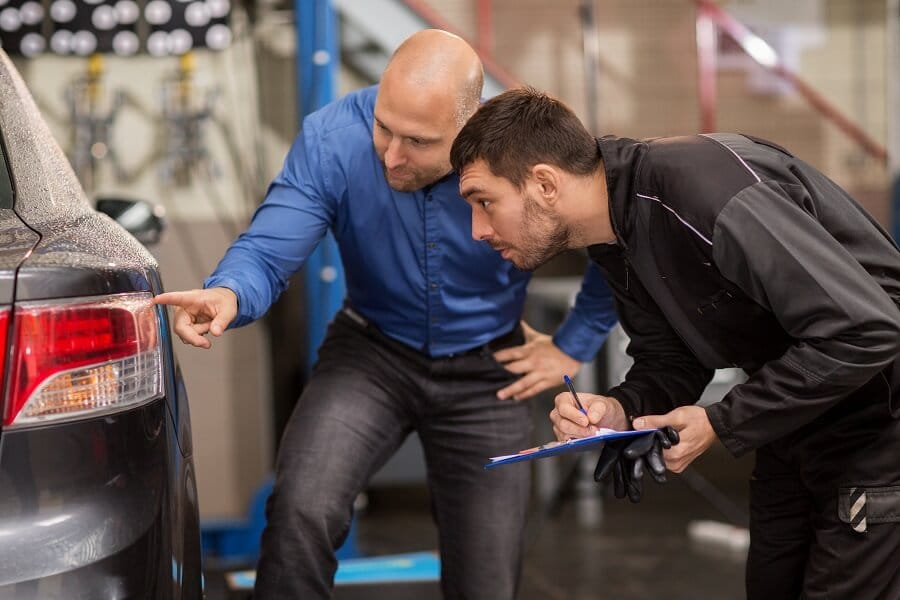
auto service repair maintenance

Regular car maintenance ensures maximum car performance, prevents costly repairs and may actually help avoid accidents. Sometimes, even the smallest defect that seems irrelevant to you may lead to a major problem which will consequently increase your chances of being in a crash, pile-up or collision.

Use this checklist to help keep your car in top running condition and to keep you and your passengers safe.

Tires

Examining your tires for wear and tear, along with checking tire pressure and alignment, are essential to ensure your vehicle’s safety on the road. According to the American Automobile Association (AAA), 83% of Americans do not know how to properly inflate their tires. The correct pressure levels can be found in the owner’s manual or on a sticker most often located inside the driver-side door jamb. Also, check the tread depth on each tire by placing a quarter upside down in the tread grooves. If the top of Washington’s head is exposed at any point, it’s time to start shopping for new tires.

Underinflation or overloading of tires may result in rapid or uneven tread wear. This could cause unexpected tire failure on a road or highway. Having a tire blowout may result in a dangerous accident causing vehicle damage or serious injury. Reports from the National Highway Traffic Safety Administration (NHTSA) suggest that tires are at least partially responsible for an estimated 11,000 traffic crashes each year.

At Gebhardt Insurance Group, we know that being insured with the proper policy protects you and your vehicle in case you are involved in an accident. Our expert team will help you find the best coverage to meet your needs when driving in Arizona.

Wipers

Windshield wipers that are damaged or do not work are a serious danger to you and others on the road. Wiper blades do not just help in the rain, they are also beneficial during dust storms and other weather conditions. At least once a year check to see if they are worn or cracked. Inspect the wipers to determine that they can still adequately remove debris for proper vision.

Working Lights

Our insurance agents cannot stress enough the importance of working lights for every type of vehicle. To test them, turn on your hazards to see whether both the blinker and steady-on safety lights work. Ask someone to stand behind the vehicle as you apply the brake to make sure the brake lights work correctly, too. Just one broken light can cause an accident.

Battery

As a general rule, the more sophisticated your car’s onboard computers are, the bigger the strain on its battery. Many new cars have powerful computers that are operating all the time. A bad battery can leave you stranded, and a faulty electrical system could cause your car to stall or operate incorrectly when driving, leading to an unnecessary collision or worse. And if you use your automobile infrequently, the battery may still become drained by the electronic systems.

It is essential that you or your mechanic look over the battery cables for cracks and breaks. The terminals should fit snugly with no loose connections. You can check your battery fluid by uncovering the refill hole. If the level is below the bottom of the cap, refill with distilled water. While you’re inspecting your battery, look around for the manufacture date. Knowing how old your battery can help you understand when it will begin to lose charge. If the battery is older than four years, it may be time to replace it.

Brakes

Knowing the key warning signs when brakes require maintenance will go a long way toward keeping you and others safe on the road. Every driver is faced with situations where it is necessary to slam on the brakes. Defective brakes take away the ability to prevent a collision with another car, property or with a pedestrian. Without proper brakes, a severe accident may occur that might have been prevented if they were working properly.

If there is screeching, vibration or if you must apply extreme pressure to the brake pedal before your car will stop, it is time to have the brakes checked out. Even if these symptoms are not apparent, get them checked out annually.

The Right Coverage

No matter where you drive, rest assured you and your car can be protected on the road with assistance from Gebhardt Insurance Group.  We are an independent insurance specialist company serving the entire state of Arizona. That means we shop the nation’s top insurance  carriers to find you the absolute lowest rate for your vehicle insurance to provide significant savings.

Arizona requires its drivers to maintain the following coverages and minimum limits:

  • $15,000 bodily injury liability coverage per person
  • $30,000 bodily injury liability coverage per incident
  • $10,000 property damage liability coverage per incident

But there are a variety of optional vehicle insurance policies, as well. It can all become overwhelming and confusing.  Our agents are true professionals and will find the best solutions to meet your driving needs at affordable prices. We deliver superior customer service and always provide personal attention to every individual. We will be there for you when you need us most.

Call or text us now at (520) 836-3244 and ask about our free insurance quotes to find the best auto insurance policy that will match your needs. We look forward to working with you.

Filed Under: Auto Insurance Tagged With: car accident, Car Maintenance Tips

Car Sounds – Nine Noises to Notice

April 19, 2018 by Steve Gebhardt

woman inspecting car engine

All cars make noise, of course, but some of the noises can be more alarming than others. Although your first inclination might be to ignore any unusual sounds in hopes they will disappear on their own, few if any car problems resolve themselves. But should every new noise send you racing to your mechanic?  Not necessarily. Here are some of the more typical car noises and what you should do about them.

9 Car Noises To Check

  1. Squealing brakes – When you drove your car off the lot for the first time, you probably heard nothing in particular when you stepped on the brakes, but now you hear sounds resembling a five-year-old playing a violin every time you approach a red light. How concerned should you be? Squealing brakes are a warning sound but not cause for immediate concern. Your brakes need to be looked at, but you aren’t endangering your life if you don’t stop at the garage on the way home from work today. But don’t let it continue squealing for too long, or what is now a fairly simple issue will turn into something more significant.
  2. The scratching, whining sound of metal on metal – Metal screeching across metal is never a sound you want to hear, not only because it’s painful to the ears, but because it is indicative of a serious problem. (If you left your squealing brakes from #1 untreated for too long, the squealing will be replaced by this metal-on-metal sound.) This is the kind of sound that should send you to the phone to make a service appointment right away.
  3. A flappy sound when the AC is on – Does it sound like there’s a piece of rubber flopping open and closed in your air vent? Well, there probably is. This is not a serious issue, merely an annoyance, and not a sign of a serious issue that needs immediate attention. At worst, it might impede the air flow into the car, but you can safely ignore this until the next time the car is in being serviced for something else.
  4. Squealing from under the hood – Instead of that child playing violin near your brakes, you’re sure she’s actually under the hood. This likely means a serpentine or fan belt problem. Since these belts keep a variety of systems functioning, their failure will be a serious issue. Although you are not in imminent danger, it does mean your next trip in the car should be to a mechanic.
  5. Humming or droning from the tires – Although the roll of tires down the road always makes some level of humming noise, a marked increase in volume or the kind of sound they make should cause concern, especially if you know you have older tires. This increase in humming indicates the tires are at the end of their lifespan, and you run the risk of blowing a tire if you don’t attend to this quickly.
  6. Whining from the steering wheel while turning – As you go around a corner, you turn the wheel as far as it will go and you hear a whining sound. You are putting stress on the power steering pump. You might be able to fix this yourself right away – just don’t turn the wheel quite so far, or back off on the turning just a hair until the noise stops. However, if the sound happens even when you make wide turns, well short of turning the wheel to its furthest point, your power steering pump is probably already damaged, which is not something you’ll fix yourself. If the power steering pump fails, you’ll know – you will need a lot more muscle to actually turn the car. And although fifty years ago most cars didn’t have power steering, nowadays you won’t want to drive without it.
  7. Hissing from the engine – If you are hearing a hissing sound from the engine either while driving or after you’ve turned it off, you may have a coolant issue and/or an overheating engine; if the hissing is accompanied by steam leaking from the hood, you definitely have an overheated engine. In this situation, you should pull off the road immediately. You can destroy the engine if you continue to drive it while overheated, also do a car maintenance during cold weather.
  8. Clicking or tapping from the engine – This can indicate a serious problem with your engine’s oil pressure. You may be able to remedy this yourself by adding oil after allowing the engine to cool. But if the addition of oil doesn’t get rid of the clicking, you need to head to the mechanic’s right away. Again, you can ruin the engine completely if you drive with improper oil pressure.
  9. Roaring exhaust from under the car when accelerating – If you can hear an extra roar of the exhaust from underneath you when you step on the gas, this indicates a serious problem in the exhaust system. Although it’s not particularly detrimental to the engine, a faulty exhaust system could be leaking carbon monoxide into the car. That can make you sick and even cause you to pass out, especially if it’s winter and your windows are up. This sound requires an immediate trip to a mechanic.

Your car is going to make noises, and many of them you can ignore. But when your car makes new noises, noises that don’t go away, you should listen to them. Modern cars are unlikely to undergo catastrophic failure with no warning while you’re zipping down the highway, so think of those new noises as a sign of a looming larger problem. Do you want to look into the problem now, while it’s probably still small and manageable, or do you want to ignore it, and wind up having to deal with – and pay for – a bigger problem somewhere down the line?  Your car is probably one of your largest assets.  One of the best things you can do for your car’s long-term health, and therefore your wallet’s, is to maintain your car regularly, and have a mechanic investigate anything out of the ordinary as soon as possible. The other is to make sure it is properly insured. Gebhardt Insurance Group can find you the best insurance at the right price. Click on Contact Us above or call us at 520-836-3244.

Filed Under: Auto Insurance Tagged With: Car Noises, Hissing Engine, Humming Tires, Squealing Brakes

Types of Business Interruption Insurance

March 27, 2018 by Steve Gebhardt

Types of business interruption insurance

Your business is an investment of your time, money and energy. You probably already have an insurance policy in place to protect. (If you don’t, there’s no time like the present!). An important part of any business insurance policy is business interruption insurance.

Business interruption insurance works to protect you by financially covering you in the event of unforeseeable damages and expenses incurred because of those damages.  Key terms to keep in mind for this insurance include: covered peril and restoration. If your business sustains damage or is destroyed interruption insurance can help reimburse you for lost income and other related expenses. This will only take place if the damage is caused by a “covered peril” and will only cover losses sustained during a reasonable period of time for rebuilding or restoration.  Covered perils will depend on your policy and any listed exclusions.  Your restoration period will be determined by the amount of damages and how long it reasonably takes to get your doors open for business again.  In simpler terms, business interruption insurance provides financial relief in the amount of the actual loss provided the cause of the loss is not excluded by the policy and only during the time period it takes to rebuild or restore the business to its previous operating ability.

There are three primary types of business interruption insurance.

Basic coverage

Basic interruption insurance is designed to cover you losses and expenses while your business is in the midst or repairs or rebuilding and is unusable. This coverage ends as soon as repairs are completed or sooner if you have a predetermined time limit built into your policy. It is also important to note that this insurance extends only for as long as it reasonably takes for repairs to take place. If you have long delays or prolong the repair process, your insurer may decline to cover beyond the reasonable period of time.

Extended coverage

Extended coverage includes an additional period of time from your repairs being completed to the time your business begins to earn income. For many businesses, it may takes some time to reopen their doors and start to make money again. If you can’t afford a lag in profit earning, you may want to consider extending your interruption coverage and make sure you are covered in case there is a gap.

Contingent coverage

Contingent insurance extends even further, to connected issues and entities. If you are a primary supplier of parts and your inability to supply a vendor that relies on you is financially damaging, your contingent coverage can kick in and save the day. This policy has a much wider reach than basic coverage and can extend to earnings that are not directly tied to the physical damage of your business.

There are some key questions to consider when assessing your business interruption insurance needs.

What do you have available for reserves?

Business interruption insurance can help keep your company afloat and solvent in the event of an unforeseen disaster or damages. If you have a healthy amount of reserve funds in the bank, you may be fine with basic coverage. However, if being closed for a month due to unexpected damages could put you out of business, consider increasing your coverage.

What is included in your basic business insurance policy?

It is critical that you understand what is and is not included in your existing policy. It is always a good idea to have your insurance professional review your policy with you to make sure you understand existing exclusions and policy amounts. If it would only cost $10,000 to rebuild your business and income for six months, you probably don’t need a million dollar policy. Appropriate coverage amounts are determined by many different factors and should be thoroughly discussed with an experienced agent. Also, your insurance professional can review your policy and identify any gaps or double coverages that can be eliminated.

What is most necessary and important to keep your business running?

Can you live without the work space but desperately need the staff on your payroll? Is the existing business space critical to your earning ability? It is helpful to identify which parts of your business are essential and then work with your agent to ensure they are covered by your policy.

Your business is more than just a brick and mortar building. Interruption insurance can help cover the cost of moving to a new site, payroll expenses, loss of income and much more. The best way you can protect your investment is to make sure you have the business insurance you need. If you are concerned about your existing policy, please call our office and let us review current coverage. We work with many different insurers and quote your policy needs with multiple companies to get you the best pricing possible.

Filed Under: Business Insurance Tagged With: Business Interruption Insurance, Types of Business Insurance

Business Interruption Insurance: What it can and cannot cover

March 20, 2018 by Steve Gebhardt

Business Interruption Insurance what it can and cannot cover

As a business owner you may put much more than just money into your business. Your blood, sweat and tears may also go into making your business a success. That’s why insuring your investment is so important.  Business interruption insurance may also be called business income insurance and you may ask yourself, “what can business interruption insurance cover?” This type of insurance is designed to protect your business in the event of losses that could be incurred by loss or damage caused by a covered peril. Covered perils will depend on your policy type of business interruption insurance and any listed exclusions. These types of policies typically cover the actual loss a business sustains during restoration.

While this all may sound very complicated, the structure of the policy is fairly straight forward once you move past the insurance jargon. In simpler terms, business interruption insurance provides financial relief in the amount of the actual loss provided the cause of the loss is not excluded by the policy and only during the time period it takes to rebuild or restore the business to its previous operating ability.

An example of a time when business interruption insurance may be used is rebuilding a business after a disaster such a fire. If your business were to suffer damage after a disaster, your business interruption policy may kick in and cover sustained losses such as:

Loss of income

If your business is closed for 6 months, you may lose a significant amount of sales. Your insurance company may use prior accounting records to determine an average amount of monthly losses.

Operating expenses

You may still be responsible for operating expenses which may be covered with this type of policy. Again, the insurer may look at historical records to determine an average expense and reimburse you accordingly. Your insurance may also help you with loan costs and even tax payments that are due.

Relocation

If your property is no longer usable you may be forced to relocate your business while the primary location is being rebuilt or repaired. Your insurer may cover moving and operating costs for your temporary location.

Employee wages

You don’t want to lose your best employees while your business is closed. Interruption insurance can help cover payroll costs until you are back up and running.

Additional expenses

You may be reimbursed for reasonable additional expenses that are incurred as part of the loss. Keep in mind that the insurance company will stress the reasonable part of this coverage.

There are some important points you should be aware of when considering business interruption insurance.

Business interruption insurance won’t cover everything.  It is not typically sold as a stand-alone policy. Because business interruption insurance is usually part of a broader business insurance policy, make certain that you understand what is and is not covered and where your policy starts and ends. For example a broader policy could exclude flooding from coverage, so your business interruption insurance will also not cover damage from floods.  Additionally, there are things that this type of policy won’t extend to. Flood damage and earthquake damage are good examples of items that are usually not covered unless they are specifically added to your policy or purchased additionally.

Business interruption coverage will only reimburse you up to a policy limit. Carefully consider what it would cost you to relocate your operations and be out of business if disaster struck. Use this cost to determine your best policy and coverage amounts.

This type of coverage stresses financial protection during the time of restoration.  Your insurance company will only be held liable for the reasonable amount of time it would take to rebuild, repair or restore your property. This period of time starts at the time damage was incurred and ends when your property has been reasonably restored.

There may be a waiting period. Many policies have mandatory waiting periods which can very from three days to three months. Make certain you know if your coverage includes a waiting period and what this time frame is. You should also have some savings set aside to cover this waiting period, just in case.
An important part of being a business owner is protecting everything you have built. Business interruption insurance provides coverage for you, your property, your income, and your employees in the event of unexpected disaster. Choosing your policy and understanding your coverage are imperative parts of making sure you have the insurance you need.

We offer the opportunity for you to work with experienced business insurance agents that will be detailed and take the time needed to ensure you understand your coverage. Our individualized attention ensures you can benefit from all aspects of your business coverage. We work with many different insurers which gives us the ability to get you coverage at the best possible price. We have made it our business to protect your business.

Filed Under: Business Insurance Tagged With: Business Interruption Insurance, Types of Business Insurance

« Previous Page
Next Page »

Recent Posts

  • Can Golf Carts Be Driven on the Road in Casa Grande? Complete 2025 Guide
  • Complete Insurance Checklist for Snowbirds & Winter Visitors in Casa Grande & Maricopa, Arizona
  • Golf Cart vs Side by Side Insurance in Casa Grande & Maricopa: Which Coverage Do You Really Need?
  • Why Casa Grande Residents Should Choose a Local Independent Agent: 5 Advantages You Can’t Get Online
  • Common Insurance Scams in Arizona: How to Protect Yourself and Your Coverage
logo-main-white

719 E Cottonwood Lane, Suite #1
Casa Grande, AZ 85122

44400 Honeycutt Rd, Suite #102H
Maricopa, AZ 85138

Facebook Twitter Feeds
5 star yelp

Insurance Types

Motorcycle Insurance
Motorhome Insurance
Mobile Home Insurance
Life Insurance
Medicare Insurance
Home Insurance
Commercial Insurance
Auto Insurance

Our Company

Careers
Contact Us
File a Claim

Recent Posts

Understanding Minimum Coverage Car Insurance
Motorcycle Insurance Components and Coverage
How to Compare Car Insurance Rates
General Liability Insurance Cost

Copyright © 2024. By GEBHARDT INSURANCE GROUP | PRIVACY POLICY

Accessibility

Online Dictionary

    Readable Experience

    Content Scaling
    Default
    Text Magnifier
    Readable Font
    Dyslexia Friendly
    Highlight Titles
    Highlight Links
    Font Sizing
    Default
    Line Height
    Default
    Letter Spacing
    Default
    Left Aligned
    Center Aligned
    Right Aligned

    Visually Pleasing Experience

    Dark Contrast
    Light Contrast
    Monochrome
    High Contrast
    High Saturation
    Low Saturation
    Adjust Text Colors
    Adjust Title Colors
    Adjust Background Colors

    Easy Orientation

    Mute Sounds
    Hide Images
    Virtual Keyboard
    Reading Guide
    Stop Animations
    Reading Mask
    Highlight Hover
    Highlight Focus
    Big Black Cursor
    Big White Cursor
    Navigation Keys

    Casa Grande Insurance Agency Accessibility Statement

    Accessibility Statement

    • www.gebhardtinsurancegroup.com
    • January 31, 2026

    Compliance status

    We firmly believe that the internet should be available and accessible to anyone, and are committed to providing a website that is accessible to the widest possible audience, regardless of circumstance and ability.

    To fulfill this, we aim to adhere as strictly as possible to the World Wide Web Consortium’s (W3C) Web Content Accessibility Guidelines 2.1 (WCAG 2.1) at the AA level. These guidelines explain how to make web content accessible to people with a wide array of disabilities. Complying with those guidelines helps us ensure that the website is accessible to all people: blind people, people with motor impairments, visual impairment, cognitive disabilities, and more.

    This website utilizes various technologies that are meant to make it as accessible as possible at all times. We utilize an accessibility interface that allows persons with specific disabilities to adjust the website’s UI (user interface) and design it to their personal needs.

    Additionally, the website utilizes an AI-based application that runs in the background and optimizes its accessibility level constantly. This application remediates the website’s HTML, adapts Its functionality and behavior for screen-readers used by the blind users, and for keyboard functions used by individuals with motor impairments.

    If you’ve found a malfunction or have ideas for improvement, we’ll be happy to hear from you. You can reach out to the website’s operators by using the following email

    Screen-reader and keyboard navigation

    Our website implements the ARIA attributes (Accessible Rich Internet Applications) technique, alongside various different behavioral changes, to ensure blind users visiting with screen-readers are able to read, comprehend, and enjoy the website’s functions. As soon as a user with a screen-reader enters your site, they immediately receive a prompt to enter the Screen-Reader Profile so they can browse and operate your site effectively. Here’s how our website covers some of the most important screen-reader requirements, alongside console screenshots of code examples:

    1. Screen-reader optimization: we run a background process that learns the website’s components from top to bottom, to ensure ongoing compliance even when updating the website. In this process, we provide screen-readers with meaningful data using the ARIA set of attributes. For example, we provide accurate form labels; descriptions for actionable icons (social media icons, search icons, cart icons, etc.); validation guidance for form inputs; element roles such as buttons, menus, modal dialogues (popups), and others. Additionally, the background process scans all of the website’s images and provides an accurate and meaningful image-object-recognition-based description as an ALT (alternate text) tag for images that are not described. It will also extract texts that are embedded within the image, using an OCR (optical character recognition) technology. To turn on screen-reader adjustments at any time, users need only to press the Alt+1 keyboard combination. Screen-reader users also get automatic announcements to turn the Screen-reader mode on as soon as they enter the website.

      These adjustments are compatible with all popular screen readers, including JAWS and NVDA.

    2. Keyboard navigation optimization: The background process also adjusts the website’s HTML, and adds various behaviors using JavaScript code to make the website operable by the keyboard. This includes the ability to navigate the website using the Tab and Shift+Tab keys, operate dropdowns with the arrow keys, close them with Esc, trigger buttons and links using the Enter key, navigate between radio and checkbox elements using the arrow keys, and fill them in with the Spacebar or Enter key.Additionally, keyboard users will find quick-navigation and content-skip menus, available at any time by clicking Alt+1, or as the first elements of the site while navigating with the keyboard. The background process also handles triggered popups by moving the keyboard focus towards them as soon as they appear, and not allow the focus drift outside of it.

      Users can also use shortcuts such as “M” (menus), “H” (headings), “F” (forms), “B” (buttons), and “G” (graphics) to jump to specific elements.

    Disability profiles supported in our website

    • Epilepsy Safe Mode: this profile enables people with epilepsy to use the website safely by eliminating the risk of seizures that result from flashing or blinking animations and risky color combinations.
    • Visually Impaired Mode: this mode adjusts the website for the convenience of users with visual impairments such as Degrading Eyesight, Tunnel Vision, Cataract, Glaucoma, and others.
    • Cognitive Disability Mode: this mode provides different assistive options to help users with cognitive impairments such as Dyslexia, Autism, CVA, and others, to focus on the essential elements of the website more easily.
    • ADHD Friendly Mode: this mode helps users with ADHD and Neurodevelopmental disorders to read, browse, and focus on the main website elements more easily while significantly reducing distractions.
    • Blindness Mode: this mode configures the website to be compatible with screen-readers such as JAWS, NVDA, VoiceOver, and TalkBack. A screen-reader is software for blind users that is installed on a computer and smartphone, and websites must be compatible with it.
    • Keyboard Navigation Profile (Motor-Impaired): this profile enables motor-impaired persons to operate the website using the keyboard Tab, Shift+Tab, and the Enter keys. Users can also use shortcuts such as “M” (menus), “H” (headings), “F” (forms), “B” (buttons), and “G” (graphics) to jump to specific elements.

    Additional UI, design, and readability adjustments

    1. Font adjustments – users, can increase and decrease its size, change its family (type), adjust the spacing, alignment, line height, and more.
    2. Color adjustments – users can select various color contrast profiles such as light, dark, inverted, and monochrome. Additionally, users can swap color schemes of titles, texts, and backgrounds, with over 7 different coloring options.
    3. Animations – epileptic users can stop all running animations with the click of a button. Animations controlled by the interface include videos, GIFs, and CSS flashing transitions.
    4. Content highlighting – users can choose to emphasize important elements such as links and titles. They can also choose to highlight focused or hovered elements only.
    5. Audio muting – users with hearing devices may experience headaches or other issues due to automatic audio playing. This option lets users mute the entire website instantly.
    6. Cognitive disorders – we utilize a search engine that is linked to Wikipedia and Wiktionary, allowing people with cognitive disorders to decipher meanings of phrases, initials, slang, and others.
    7. Additional functions – we provide users the option to change cursor color and size, use a printing mode, enable a virtual keyboard, and many other functions.

    Browser and assistive technology compatibility

    We aim to support the widest array of browsers and assistive technologies as possible, so our users can choose the best fitting tools for them, with as few limitations as possible. Therefore, we have worked very hard to be able to support all major systems that comprise over 95% of the user market share including Google Chrome, Mozilla Firefox, Apple Safari, Opera and Microsoft Edge, JAWS and NVDA (screen readers), both for Windows and for MAC users.

    Notes, comments, and feedback

    Despite our very best efforts to allow anybody to adjust the website to their needs, there may still be pages or sections that are not fully accessible, are in the process of becoming accessible, or are lacking an adequate technological solution to make them accessible. Still, we are continually improving our accessibility, adding, updating and improving its options and features, and developing and adopting new technologies. All this is meant to reach the optimal level of accessibility, following technological advancements. For any assistance, please reach out to