
File a Claim

Make a Payment

Facebook Twitter Feeds
logo-main-white
  • Home
  • About Us
    • Our Insurance Carriers
    • Careers
  • Insurance Types
    • Auto Insurance
    • Bonds
    • Commercial Insurance
    • Churches Insurance
    • Home Insurance
    • Life Insurance
    • Medicare Insurance
    • Mexico Insurance
    • Mobile Home Insurance
    • Motorcycle Insurance
    • Non-profit Insurance
    • Renters Insurance
    • Insurance for Snowbirds Arizona
    • Golf Cart Insurance
  • Locations
    • Casa Grande
    • Maricopa
  • Blog
  • Contact Us
  • Get Free Quote
Text or Call Us Today!
520-836-3244

Author: Steve G

Insurance blog, articles, and news written by Stephen Gebhardt, founder and CEO of Gebhardt Insurance Group an Insurance agency in Casa Grande, Arizona.

Who Has the Cheapest Motorcycle Insurance in Casa Grande

November 20, 2017 by Steve Gebhardt

Motorcycle Insurance Casa Grande

Do you love riding motorcycles on Arizona scenic roads or highways? If you do and you are from Casa Grande, then you surely need get motorcycle insurance. Motorcycles are highly prone to accidents, and the fatality and injury rates are higher than that of cars. So it is just logical for motorcycle riders to get insured. It is for your own safety and for your financial protection.

But aside from this, insurance coverage for automobiles is mandatory in Arizona. This rule applies to motorcycles as well. Being mandatory, whether you like it or not, you need to get insured if you want to ride your bike in the streets or Casa Grande or anywhere in Arizona. Rightly so, so you can ride safe and worry-free.

What Does Motorcycle Insurance Cover

This depends on your needs and the price you pay for your motorcycle policy. These are the different types of coverage:

  • Damage to property and bodily injury which you are legally responsible while you were riding your motorcycle.
  • Any injury you incur because of an accident you encounter with an uninsured motorist.
  • Damage to protective gear.
  • Theft, loss, vandalism, fire and other similar circumstance.
  • Protection even when your motorcycle is in storage, like during the winter.
  • Damage incurred by your motorcycle as a result of an accident you were involved in.
  • Emergency roadside expenses.
  • Attached side cars.
  • Custom motorcycle works, like upgraded components and paints

Take note that the ones listed above are typically not covered in one policy. Ask a qualified motorcycle insurance agent, the specific type of coverage you many need as it may come as an additional coverage. There are separate deductibles for many of the different insurance types. There are even policies that only pay for the replacement factory parts. Upgrades like chrome parts, paints and accessories are covered only if they are paid for additionally.

The cost

The cost again depends on the individual needs of the rider and the coverage of the insurance you get. But in Arizona, the minimum amount you need is $30,000 per incident and $15,000 per person.

Who has the cheapest motorcycle insurance

With our economy, everyone’s on a tight budget. This is one of the reasons why riders, instead of getting additional coverage, only settle for less just so they can fit it within their budget. While there are various insurance companies in Casa Grande that offer motorcycle insurance services, these companies do not share the same rates. The prices vary from company to company.

If you are looking for the cheapest motorcycle insurance rates in Casa Grande, look no further. Here at Gebhardt Insurance, we can guarantee you both affordability and protection. Our motorcycle insurance service is the cheapest in the area. You can get the financial protection you need at the price you can afford.

As proof that we value your hard-earned money, here at Gephardt Insurance Group, we shop around for discounts to help you find the best value. Get your free quote online or call us now.

Get your motorcycle insurance with us and ride safe.

SaveSave

Filed Under: Motorcycle Insurance Tagged With: Cheapest Motorcycle Insurance, Insurance Coverage, Motorcycle Insurance Policy

How to Be Safe When Riding a Motorcycle in Arizona

November 7, 2017 by Steve Gebhardt

Motorcycle insurance photo

Motorcycles are popular in Arizona, especially in the cooler fall and winter months. They are fun, exciting and thrilling to ride, not to mention fuel-efficient. But it is also more dangerous to ride than cars. Statistics show that motorcycles are 30 times more prone to accidents than cars.
Because of this, safety measures are needed when riding a motorcycle. Whether you are riding a motorcycle in Arizona as a sport, casually or as a primary means of transportation, you surely need to heed these safety reminders:

  • Only ride a motorcycle that you can handle.
    If you are not used to riding motorcycles with powerful engines, then you must stick to average ones. Today’s bikes are a lot faster and more powerful than the models built 20 years ago. Choose a bike that is right for your skills, experience and age. Yes, age matters because our reflexes naturally become slower as we age.
  • Wear a helmet.
    Some riders are not comfortable wearing helmets. But riding a motorcycle without wearing one is highly risky. Motorcycle riders without a helmet are more prone to suffer from a fatal injury during a crash. According to government studies, they are also likely to suffer brain injuries than those who wear helmets.
  • Wear the right gear.
    Safety should be your number one priority when on the road. Wearing sandals, T-shirt and jeans is a no-no when riding a bike. Prepare for a road crash because accidents are just sometimes around the corner. For protection, wear jackets, full pants, shoes, gloves and helmet visor. These will protect you and reduce the risk of injury and fatality in case you bump into an accident. Safety first.
  • Watch for road signs and hazards
    Always be alert when driving. If you see a sign that says “accident-prone area,” then you should slow down and drive more carefully. Also, be careful of any road hazards such as sand, pebbles, wet leaves, bumps, and potholes. These may pose as serious hazards when you are driving on a motorcycle. When you notice such hazards, slow down or better yet, avoid them.
  • Always be on the defensive.
    Sometimes, no matter how careful you are when you drive, you still get involved in accidents because of other drivers who are reckless. So when you are on a bike, be alert and keep an eye out for oncoming cars. There are so many reckless drivers out there. Another thing, don’t tailgate. Always keep a safe distance between you and the cars in front of you. This will allow you to stop or avoid an accident in case the cars in front of you suddenly act wildly.
  • Avoid bad weather.
    When the weather’s bad, the safest way is not to ride on a motorcycle. If you really need to go out, bring a car. The rain can make it slippery for the motorcycle as it reduces the grip of the tires on the road. However, if you really happen to ride a bike on a rainy day, just be extra careful. Avoid sudden maneuvers and stopping. Be gentle with steering, throttle and brake.

Get Motorcycle Insurance in Arizona

If you really want protection when riding a motorcycle in Arizona, get motorcycle insurance. It is highly important that you get financial protection too. An insurance will not only protect you and your motorcycle, it will protect you from theft, loss, damages, injuries and other people who get involved in the accident as well. With the high accident risk of motorcycles, it makes it more important for riders to be insured.

How Much Does Motorcycle Insurance Cost?

Generally, motorcycle insurance premiums will depend on the net value of your motorcycle and some other factors such as the following:

  • Motorcycle type
  • Riding history of the driver
  •  Security features or devices of your motorcycle
  • Modifications made on the motorcycle

Also, the cost depends on the coverage of your insurance. You can get the cheapest motorcycle insurance rates in Arizona. But price is not everything. So make sure that you are properly insured.

Do not wait for something to happen to you before you think of about safety and insurance. These two must be your priority when you own a motorcycle. We hope that you will keep these friendly reminders in mind before you hit the road.

If you have not yet been insured, visit Gebhardt Insurance. Again, ride safe.

SaveSave

Filed Under: Motorcycle Insurance Tagged With: motorcyce hazards, safe riding tips

What is a Renter Insurance Policy?

October 25, 2017 by Steve Gebhardt

Renters Insurance

What is a renter insurance policy? It is similar to a home insurance, but applies not to homeowners, but renters. So if you just rent your house or apartment, then this is the insurance you need.

Basically, it is a group of coverages with a primary purpose of protecting you and your belongings. The types of such insurance policy include protection for your belongings, liability insurance and additional living expenses. Also referred to as tenant insurance, this policy protects you in case of a visitor injury or a break-in.

Personal Property Coverage

This is a typical component of a renter insurance. This covers the cost of replacing your personal belongings in case of damage or loss. This applies to risks such as theft and fire damage. This means that if you rent a property and you are covered by a renter insurance and any of your belonging has been stolen or destroyed, then the coverage may help pay for them, whether it’s for repair or replacement.

With this, it is important that you know your coverage limits. The limit is the maximum amount that will pay for the personal property lost or damaged. If you are unsure of your coverage limits, contact your insurer or agent and check what is or may not be covered.

Liability Coverage

Renter insurance policy also offers liability coverage. This will protect you in the event that you are found to be legally responsible to any damage or injury caused to or by other people while inside your property. If you are covered, then you will no longer pay out of your pocket for any cost involved. This is important because you can never be sure when an accident hits. Again, know your coverage limits. You may get an additional coverage as needed.

Additional Living Expenses

Your rented place serves as your home until your contract of lease expires. But what happens if a fire damaged your rented home? What will you do now if you are unable to live in your home because of damage? The solution to this question is to get renter insurance.

This kind of insurance typically includes additional living expenses coverage. This coverage helps pay for other costs you incur while you are still unable to live in the place you are renting. Say for example, if your rented place has been damaged by fire, you certainly would need to move out while repairs are ongoing. During this time, you will have to rent another place or stay at a cheap hotel. The costs that you would incur, excluding the basic expenditures, during this period will be covered or paid for by the additional living expenses coverage. But as to the amount covered, this will still be subject to the coverage limits of your policy.

If you are just renting your home, living can surely be costly. How much more if any damage or injury happens and you are not financially ready to pay for such? Thanks to renter insurance, now you can live in your rented home with peace of mind, knowing that you will be protected and covered in case something “costly” happens.

For your renter insurance needs, make an appointment with Gebhardt Insurance.

SaveSave

Filed Under: Renters Insurance Tagged With: Liability Coverage, Living Expenses, Personal Property Coverage

4 Technological Features That Impacts Auto Insurance Cost

October 19, 2017 by Steve Gebhardt

Technological Features That Impacts Auto Insurance Cost

Technology is fast developing. Everything is getting automated and innovations are quickly changing the way we live our lives, including driving. The new technology introduced on cars not only affect the way people drive; it may also have an impact on the drivers’ auto insurance cost.

Auto insurance premiums are calculated based on several factors, including the likelihood of risks. Since many of the newly introduced technologies are designed to reduce accidents, injury, theft and others, it follows that having such technology will cut the cost of your auto insurance.

4 auto safety features that can cut down insurance cost

  1. Autonomous Features
    Many of the new cars sold in the market now have autonomous features, including automatic braking and parking assistance. Technology such as this, as found out by experts, is responsible for the reduction of accidents and crashes up to 38%. Because of the accident-reducing features of such technology, it is likely that insurers will offer you with cheaper premiums. Reduced accident risk is generally equivalent to lower insurance cost.
  2. Black Box Technology
    This technology is also called telematics. The main function of this technology is to monitor the drivers’ actual usage of their cars. Through a small device or phone app, the insurers will be able to check the actual driving behavior of the insured. Aside from this, driving experience, the type of car used and the age of the driver are also measured in. Factors like the number of times the car is being used, the braking and the speeding are also accounted. All these will help insurers have a better idea on the possible driving risks. So if you have such technology, and the records show that you are a careful driver, then the insurer will likely give you reduction on your premiums.
  3. Dashboard Cameras
    Dashboard camera is the most accessible and affordable kind of technology for cars. This is the reason why many drivers now avail of such device. Also known as dash cam, this small camera is mounted on the dashboard of the car with the purpose of recording the car’s journey. This makes it easy to watch and check the actual footage of the conditions and events leading up to the accident. This is important in determining whether the driver was at fault or not. If you have a dash cam, it is easier to provide that the accident was indeed not your fault or out of your control. Because of the importance of dash cam, insurers now give discounts on drivers who mount dash cam on their vehicle.
  4. Extra Security
    Security devices for vehicles are also now available. There are systems and devices that are designed to minimize the risk of vandalism, theft and damage. These security devices will allow you to convince the insurer that your vehicle is a low-risk. By adding or installing high-tech security features, it is likely that you will be given cheaper premiums.

So if you want to minimize your auto insurance cost, consider getting any of the abovementioned devices or technology. It’s not only that, you can also ensure your safety and that of your family when driving. Make an appointment with Gebhardt Insurance today.

Filed Under: Auto Insurance Tagged With: auto insurance cost, Autonomous Features, Black Box Technology, car insurance, car technology, Dashboard Cameras, Extra Security

Auto Insurance Costs on the Rise in Arizona

October 4, 2017 by Steve Gebhardt

A growing economy is definitely great news. But it turns out that it’s apparently not that good for auto insurance. Logic dictates that if the economy is strong, prices go low, including that of gas. Cheap gas means drivers go more miles which could give rise to car insurance claims. And you do the math, the end result Is insurances companies reacting by hiking up the premiums. This scenario is true as well in Arizona.

In 2016, car insurance rates in the country rose more than five percent in just a span of 12 months. This figure is based on the U.S Bureau of Labor Statistics. Another study shows premium for an average married middle age man rose up to nearly ten percent in just a year, even rising to more than $1,200.

Many car insurers say that the reason why they implement premium rate increases in auto insurance is to combat the recent cost headwinds. Despite the fact that number of accidents is declining, still the average payout on accidents is on the rise. Based on confirmed data, according to Insurance Research Council, the number of claims from 2005 to 2013 for bodily injury dropped down to 14.5. Despite this, the average cost per payout still hiked up to 32 percent. Within this period, the inflation rate spiked to 19 percent as well. The long-term trend shows that the high payouts are likely to continue heading in that direction.

The National Safety Council reported that last year, the auto fatalities rose to an average of eight percent. The problem with this figure is that it is the biggest annual increase in 50 years. This suggests that insurance company will try to offset their costs for years to come.

People who have clean driving record are more likely to enjoy certain advantages. However, a great record does not automatically immunize you from any rate hike. The reason for this is that aside from a driving record, there are other factors that are involved. These include non-driving factors like your credit profile.

But there are still ways to get the best auto insurance deal despite the fact the cost is on the rise in Arizona.

Auto Insurance Fraud

One of the many concerns of insurance companies are fraud claims. Today, companies has many ways how to detect insurance fraud.  Insurance fraud cost millions of loses according to State Insurance Fraud Bureau. 

2 Ways to Get The Best Auto Insurance Deal

  1. It’s always safe to shop around. Many people just go straight to an insurance company without checking on others or without weighing on the reputation of such company. So the best way, really, to get a good auto insurance deal is to go to the right insurance provider. This is true whether you are switching or applying for one.
  2. Another helpful tip is to choose a higher deductible. While it is tempting to just stick a lower deductible, the best thing to do actually is to go for $1,000 or even higher deductible. This is because a higher deductible will help you avoid on making small claims, which could actually save you plenty of money.

While auto insurance costs may continue to rise in Arizona, the wise thing to do is to find a way to navigate through it. To find out more about auto insurance, check out Gebhardt Insurance.

SaveSave

Filed Under: Auto Insurance Tagged With: auto insurance costs, insurance premiums, Insurance Rates

Life Insurance Basics

September 15, 2017 by Steve Gebhardt

Life Insurance Basics

“Even death is not to be feared by one who has lived wisely” – Buddha.  Life and death are difficult topics but one simply can’t exist without the other.  Planning for death can be a wise way of ensuring financial security for those left behind.  Life insurance can make sure that death does not impact your family or business financially.  If you would like to live wisely and plan for the inevitable, there are many different types of life insurance that can protect your loved ones and allow you to invest in your future.

What Is Life Insurance?

Life insurance consists of a contract between the policy holder and an insurance company.  In exchange for premium payments, a life insurance company will pay out a predetermined amount to a designated beneficiary in the event of the death of the insured.  Life insurance comes in many different forms and is a valuable planning tool for many people with a wide range of insurance and investment goals.

Why Do You Need Life Insurance?

Life insurance is an important income replacement tool.  If you have anyone that relies on you financially, you should consider a life insurance policy.  For instance, if you have minor children and you are the primary income provider for the family, a life insurance policy could provide financial stability for your children in the event of your death.  Life insurance can extend much further than just protecting your children.  If you have elderly parents that rely on you to financially provide for their housing or care, a life insurance policy can guarantee their situation and lifestyle for years to come.  Life insurance policies are also common for business owners.  If you own, or are a major stakeholder in, a business, a life insurance policy can provide peace of mind for other owners or stakeholders.  If you were to die unexpectedly, the payout from your policy could provide financial solvency while the remaining members of the business decide how to best move forward.

What are Your Life Insurance Options?

There are many different variations of life insurance so choose carefully when considering which is the best for you.  The two most common types of life insurance are term and permanent.  Term insurance extends coverage to the insured for a set amount of time.  This could be one year or thirty years depending on the length of the contract.  Term insurance typically has the lowest premiums because if the insured dies after the term of the contract, the policy doesn’t have to payout.  If you are considering term insurance, make sure you understand every portion of the contract.  The length of time that you are covered is just one important piece of a life policy.  With most term policies, the payout and premium amounts stay the same throughout the length of the contract.  Term policies are typically the most straightforward.  You have a contract for a set amount of time and you pay a set premium in exchange for a predesignated payout if you die within the time frame established in the contract.  If you die after the insurance policy expires, you do not receive a payout and the insurance company keeps all of the money you have paid in premiums.  Term life insurance does not have a cash value component, which helps keep the premiums low but means the policy has no value after it expires.  If you don’t like the possibility of paying for a benefit that your loved ones may never receive, there are other life insurance options that may be a better fit.

Permanent life insurance has a cash value component that you won’t find with a term policy. These policies are also designed to last for the entire lifetime of the insured as long as the premiums are kept up.  There are many different variations of permanent life insurance but here are the most common:

  1. Whole Life Insurance

Whole life insurance is a good fit for people that want investment returns as well as a death benefit in place for their beneficiaries.  Whole life insurance contains a death benefit and investment component.  As the investment component grows, the insured can borrow against or withdraw money from the policy for things like college or major purchases and still retain a guaranteed death benefit amount within the policy.  Traditional whole life policies have premiums and death benefits that are set and do not change.

  1. Variable Life Insurance

Variable life insurance lives up to its name, by varying the amount of cash value and death benefit available to the policy holder depending on the investment performance.  The insured is still entitled to a death benefit but a portion of the premiums are allocated to various investment vehicles.  This type of policy is not for the faint of heart as your premiums, cash value and death benefit amounts may change depending on how your investments are performing.  Variable life policies can be subject to additional fees and surrender charges so please speak with a knowledgeable agent prior to signing a contract to make sure that this is in fact the best fit for your investment and insurance goals.

  1. Universal life insurance

Universal life insurance is very similar to variable life insurance in that it has an investment component, cash value and death benefit.  The primary difference is the investment component and how it impacts the policy.  Universal life insurance offers a fixed interest rate while variable life insurance rates fluctuate depending on how the investments are performing.  One of the biggest benefits of this type of policy is that it offers you a tremendous amount of flexibility.  You may be able to use your cash value towards paying your premium or adjust your death benefit amount.  Again, there are potential positives and negatives with this type of policy and it is advisable to meet with an experienced insurance agent when choosing the best insurance for your needs.

The first step when considering life insurance is to establish your long term financial goals.  Once you have identified your needs and budget, work with a skilled agent to pinpoint the best insurance vehicle for you.  With so many options, there is an insurance product available to meet your needs and provide you with financial peace of mind.

Filed Under: Life Insurance Tagged With: Life Insurance Options, Life Insurance Policies, Universal life insurance, Variable Life Insurance, whole life insurance

Insuring Properly During Monsoon Season

August 17, 2017 by Steve Gebhardt

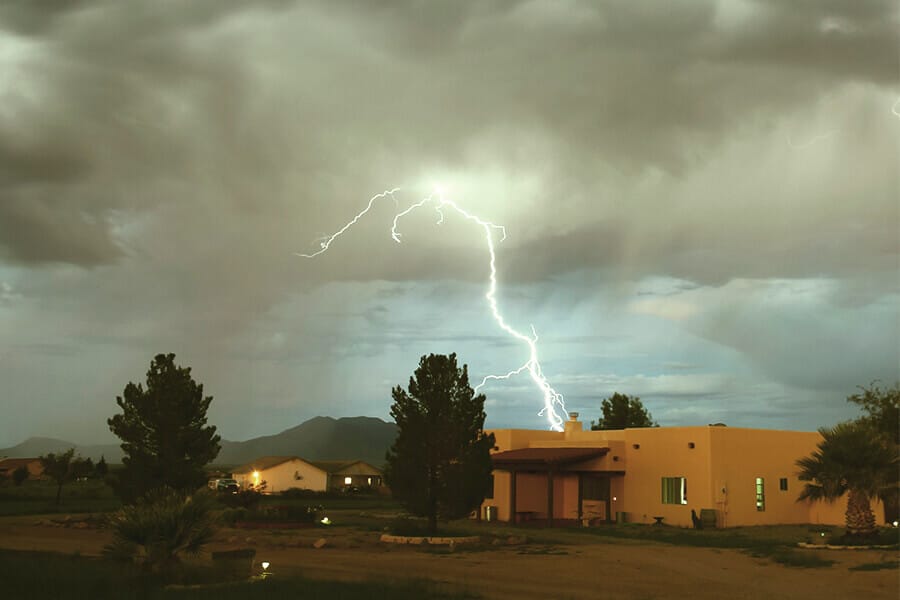
monsoon climate with lighting

If you are not native to Arizona, you might find yourself in for a wet and wild ride during your first monsoon season.  Dry air and hot temperatures over 100 degrees could make you long for the rain and desert thunderstorms to cool it down temporarily. Unfortunately, wet and cooler weather aren’t the only things monsoons bring. Summer storms during monsoon season can make their mark with powerful winds and quick and heavy rainfall. The extreme and varying weather conditions can put your home against serious challenges. This is why you need monsoon season home insurance for water damage coverage.

Monsoon season: What is it?

Monsoon season runs from mid-June through the end of September and refers to a specific weather pattern common to the area during this time period.  Monsoon season brings a characteristic shift in wind patterns that can pickup moisture from the Gulf of Mexico and California.  This moisture and wind combined with a low pressure zone can result in extreme seasonal conditions including thunderstorms, short bursts of torrential rain, hail and high winds.

How monsoon season can impact you

Some monsoon seasons will be dry and mild while others will bring flooding and inches of rain. So, how can monsoon season impact you and your home, especially if you are living in a flood zone? Here are three types of common consequences of a monsoon.

Flooding

Monsoons can bring heavy rainfall with ensuing flooding. Unexpected storms can bring an inch or more of water to otherwise dry areas resulting in flooding. In August 2016 the city of Phoenix Transportation Department issued advisories for several roads and freeways that were closed due to flooding. People had to be rescued from their vehicles, power lines were downed and manhole covers were displaced by moving water. Homes can also fall victim to flooding. Prior to purchasing your home you may need to check to see if it was in a flood zone. It is important to note that monsoon rainfall is not restricted to areas that fall into a flood zone and can strike any home at any time.

A standard homeowner’s insurance policy will not typically include flood coverage or water damage to your belongings. If you feel that your home is susceptible to flooding or monsoon water damage, make sure that your insurance provides adequate coverage.

Fallen Trees

High winds that come with monsoon storms also bring a plethora of potential problems.  Downed trees and power lines can create safety hazards along the roadways and in your home.  A tree that is uprooted in high winds can fall on your home or vehicle and could be your financial responsibility to remove. It’s important to understand how your insurance company will treat damage caused by fallen trees.  Regardless of the damage, you will be financially responsible for your insurance deductible.  A standard insurance company should cover at least some of the damage to your property including surrounding buildings such as a shed.  Insurance will probably also pay to remove damaged trees up to $500 or $1000 per tree. Your insurance may not pay to replace the damaged plants or trees depending on your coverage.

Power Outage

Another unfortunate consequence of monsoon storms may be power outages.  Homes without power in the Arizona sun can become unlivable quickly due to rising temperatures and no air conditioning.  You may be forced to stay with family, friends or relocate to a hotel until your power is restored.  Coverage for hotel expenses will vary from policy to policy so make sure to review your existing coverage closely.  Power outages can also cause food in your refrigerator to spoil and surprisingly enough a common homeowner policy will reimburse you for spoiled food up to $500 a monsoon season home insurance can be a big help in cases like this.

Monsoon Season Home Insurance

Insurance policies can vary just as much as monsoon seasons from year to year. By having a monsoon season home insurance, you are prepared when worse comes to worst. Once you understand what monsoon season is, you will be armed to protect yourself against it. Similarly, you need to understand your insurance policy and the coverage that it offers. If your insurance does not protect you in the event of flooding, high winds, or downed trees, consider increasing your coverage or adding appropriate addendums to protect your home and property. Flooding can be common even if you don’t live in a designated flood plain. If you have questions about your insurance coverage, work with an experienced agent to review and revise your policy.

Monsoons bring cooler temperatures and potentially dangerous and damaging conditions. It can be disconcerting to suffer damage to your home and then be displaced until repairs can be completed. The best circumstances would be having a most comprehensive home insurance coverage that can protect your home. Having the the right home insurance with water damage coverage can be beneficial for homeowners. Call Gebhardt Insurance on how to have water damage coverage.

Filed Under: Home Insurance Tagged With: Monsoon Season, water damage

Auto Insurance Tips for Young Drivers

August 3, 2017 by Steve Gebhardt

Lady driver holding car keys

In 2013, young people ages 15-19 represented only 7% of the U.S. population. However, they accounted for “11% ($10 billion) of the total costs of motor vehicle injuries”. It’s no secret that insurance companies view young drivers as high risk. Insurance companies base their premiums on the likelihood that they will have to pay out on a claim or accident. Young drivers face higher premiums as a result. A young, newly licensed driver can expect to pay a substantial premium for auto insurance compared to their older, more experienced counterparts. The good news is that there are strategies that can be used to defray the expense of insuring a young driver. Besides of having an auto insurance, young drivers should also learn how to drive safely.

  1. Add a newly licensed driver to the family policy. Young drivers may be in a position to purchase their own insurance policy but this is usually not the most cost effective route. By adding a new driver to an existing family policy you may qualify for additional discounts such as multiple vehicle discounts and loyalty discounts for policies that are longstanding. An insurer does not want to lose your business and if you are an existing client with multiple policies and a long history with the company, they may offer you a lower rate for a younger driver.
  2. Complete a professional driving class. If you are a new driver and hope to get the lowest rates possible, you will need to bring down your risk in the eyes of the insurance companies. A professional driving or safety class can help you do just that. The more you practice under the supervision of an instructor, the less likely you are to be in an accident. Insurance companies place different values on different strategies so do your research in advance and see if the companies you are considering offer discounts for these types of classes. Here are 6 ways on how to bring down your car insurance down.
  3. Demonstrate safe driving and be patient. The primary reason that older drivers receive better rates is that they are more experienced and statistically less likely to file claims due to accidents. As a young driver, think about your insurance rates similar to your credit. You need to build your driving record over time. If you can patiently practice good driving habits and avoid accidents, tickets and citations you may be rewarded with lower premiums.
  4. Sign a safety contract. Some insurer’s will reward you financially for your written commitment to safe driving habits. This can include promising to drive responsibly, abstaining from drinking and driving and refraining from texting or using the phone while driving. Safety contracts and their terms can vary as well as how an insurance company may value them. Researching various insurance companies or working with an experienced agent can help you determine which insurers will offer a discount for a safety contract and what the contract should contain. Aside from the insurance benefits, a safety contract is a good idea to clearly lay out safe driving expectations.
  5. Bundle your policies. Insurance companies don’t want your young driver’s policy; they want your young driver’s policy, your homeowner’s policy, your parent’s policy, your business insurance, etc. Bundling policies allows an insurance company to keep as much of your business as possible and gives you pricing discounts as a result. Bundling is also a convenient way of dealing with one company for all of your insurance needs. This could mean one bill on one set date every month or year instead of multiple bills from an array of companies throughout the year. Bundling simplifies your life and makes your insurance rates more affordable.
  6. Purchase a car with up-to-date safety features. Young drivers are viewed as high risk, but high tech safety features can help lower the likelihood of an accident and ensuing claims. Features such as anti-lock brakes, airbags, stability control, collision avoidance systems and lane departure warning systems can all help make a vehicle and its driver safer. Anti-lock brakes help a vehicle maintain traction on the roadway while airbags can minimize physical injuries in the event of an accident. Stability control systems help prevent the vehicle from skidding or rolling over. Collision avoidance systems can use a variety of technology such as radar and cameras to detect hazards and potential collisions. These systems can either alert the driver to the danger or autonomously correct to avoid an accident. Safety features can greatly lower the risk of accidents and claims.
  7. Get good grades. Responsible students may translate to responsible drivers. If you truly want to lower your insurance rate, hit the books and get the best grades possible. Good student discount amounts and requirements may vary by insurer but many offer this discount opportunity.

Insurance companies want to mitigate their risk. The best way to prove you are a low risk driver, despite your young age and lack of driving experience, is to be responsible in other aspects of your life. Use the tips above to beat the odds and get the lowest premiums. If you are a new driver that needs help getting the best insurance policy possible, contact Gebhardt Insurance. As an independent agency we work with many different insurance companies to get the coverage you need for a price you can afford.

Filed Under: Auto Insurance Tagged With: Insurance Premium, Licensed Driver, Preffesional Driving, Young Driver

How to Get the Best Motorcycle Insurance Rates

July 19, 2017 by Steve Gebhardt

Motorcycle insurance photo
Motorcycle insurance isn’t just a good idea, in most states it is legally required. Unless you are independently wealthy and can afford to cover expenses such as replacing your motorcycle, medical expenses for yourself and others and property damage, a comprehensive insurance policy is a must. Protect yourself and your financial health by having the insurance you need to cover the possible expenses of an accident.

What Does the Best Motorcycle Insurance Include?

Have you asked your self what are the components of a motorcycle insurance? Motorcycle insurance is similar to other vehicles in that the policies can have huge and potentially costly differences. A comprehensive policy should include all of the following:

  1. State minimum coverage and more
    Currently, 47 out of 50 states require some form of motorcycle insurance. The amounts of coverage required differ depending on the state you live in. You need to have insurance not only to protect yourself but also to comply with state law. Keep in mind that state minimums are the bare minimum and should rarely, if ever, be the only coverage you have.
  2. Bodily injury and property damage liability
    Any motorcycle insurance policy should include coverage for bodily injury and property damage liability. If you are at fault for an accident while riding your motorcycle and other people are injured as a result, bodily injury coverage will help pay for expenses related to those injuries, such as medical expenses. Property damage liability covers any property that may be damaged in the accident. This can includes items such as another person’s car or motorcycle and also public property such as road signs and utility poles.
  3. Under/uninsured motorist coverage
    Many states will require you to have under/uninsured motorist coverage. This type of insurance is needed in the event of an accident where the responsible party does not have insurance or does not have enough insurance to pay for the costs associated with the accident. This can protect you financially even if another driver is uninsured.
  4. Replacement coverage
    It’s important to note that property damage liability coverage is designed to cover other people’s property, not your own. Replacement coverage can fill in the gap and help pay for any damages to your motorcycle or other property. Unless you have enough money in the bank to pay for repairs or a brand new motorcycle out of pocket, this type of insurance coverage is a must.

What Does the Average Motorcycle Insurance Cost?

Motorcycle insurance rates will fluctuate based on a number of factors. Your age is still looked at as a prevalent factor when determining insurance rates. If you are under the age of 25 you can expect to pay higher rates than those a little older than you. Insurers consider younger drivers a higher risk and because of this will charge them more.

Your driving history is also a large factor in your premium costs. If you have one accident under your belt already you may be able to get insurance with little to no increased fees, however, if you have two or more accidents on your driving record they may cost you. Insurance companies will do their homework and will carefully scrutinize your driving history. Small citations or moving violations won’t do as much harm to your wallet as accidents with expensive claims. Different companies will have different levels of financial penalties for a streaky track record, so make sure that you shop around for the best price possible.

The type of motorcycle you purchase will also directly relate to the cost of insurance. The faster and more expensive the vehicle, the higher the insurance price tag. Similar to the difference in insuring a minivan versus a Ferrari, a highly-valued racing bike will cost more to insure than a less expensive and slower motorcycle. Sport bikes like the Ducati 1199 Panigale and Suzuki’s GSX-R1000 are good examples of motorcycles that will be on the high end of cost for insurance. These bikes are built forspeed and roadway maneuverability making them likely choices for customers that like to go fast. Any sport bike will be associated as a higher risk to an insurance company and your costs will reflect that.

Expensive to repair or replace bikes will also increase your insurance premium. If you own a custom bike with parts that are difficult to find or a bike that is commonly stolen your insurance rates will be higher. Honda’s are the most commonly stolen motorcycles. If you have an insurance policy that covers the cost of replacement in the event of theft (and you should), expect to pay a little more. The amount of coverage also impacts your monthly premiums. If you maintain the bare state minimum requirements in coverage, you will pay much less in monthly fees than if you carry comprehensive coverage. That being said you will also be much less protected financially in the event of an accident.

Protect Yourself With Motorcycle Insurance

Don’t take chances. Enjoy riding your motorcycle with the peace of mind that you have the right insurance in place, just in case. Call Gebhardt Insurance today and let us make sure you have the insurance you need for a price you can afford.

Filed Under: Motorcycle Insurance Tagged With: Bodily Injury, Insurance Rates, Motorcycle Insurance Rates, Property Damage Liability

Distracted Driving

July 5, 2017 by Steve Gebhardt

driver texting while driving

What Is the Definition of Distracted Driving?

Distracted driving is the act of driving while engaged in other activities. These activities may attention away from the road and what’s going on around you with disastrous results. Legally, the state of Arizona is one of the very few that does not have a widespread law that addresses distracted driving. That said, several individual cities and counties have enacted laws to help curtail this dangerous habit. In addition, if you are in an accident and you were distracted the other party may have a much easier time proving you were at fault and are liable for the accident and any ensuing damages. While distractions are plentiful, it is important to remember, it only takes a second for an accident to happen.

Types of Distracted Driving

When there are just not enough hours in the day, it is all too tempting to try and multitask while in the car. While no one can fault you for trying to make the most of your time, you need to weigh the risk versus reward. There are many distractions for drivers; see below for the most common examples. Are any of these items worth your life or the life of someone else?

    1. Cellphones

Cellphones are one of the most common sources of distracted driving. People use their phones to talk to friends, text and send pictures of videos, often while behind the wheel of a moving vehicle. Many states are now outlawing or limiting the use of phones while driving. Some studies show that talking on the phone while driving is just as dangerous as driving drunk. The number of accidents caused by this particular distraction is sobering. “The National Safety Council’s annual injury and fatality report, “Injury Facts,” found that the use of cellphones causes 26% of the nation’s car accidents”. With more than a quarter of car accidents attributed to cellphone use, it is imperative to give your full attention to driving and be particularly attentive to the behaviors of drivers around you.

    1. Food

There’s nothing worse than running to work on an empty stomach, but swinging by the drive through and eating on the way can be dangerous. You’ll have to remove at least one hand from the wheel to hold your food of choice and if you accidentally drop your meal it could cause you to take your eyes off the road. Eating is an all too common but nonetheless dangerous distraction.

    1. The Stereo

Music can be your best friend while on the road. But incessantly changing the stations or fighting with your uncooperative stereo, Bluetooth, or iTunes on your phone can all lead you to stop paying attention to what’s going on around you. Whenever you get into the car, try to setup your stereo or source of audio entertainment in advance. If you are listening to an audio book and you know you are getting to the end of a disc, go ahead and listen to the last few minutes before you pull out of the driveway. Then start a new disc and head out on your adventure. A few minutes of prior planning can save you a distraction, possible accident and many costly headaches down the road.

    1. Friends

Family and friends can make anything more fun, including road trips or even just running errands around town. That said, they can also make driving more dangerous. Sometimes a person can become overly engaged in conversation and become distracted. While it is fine to talk to your passengers, try to keep your eyes on the road and your mind focused on what is going on around you. Whenever you are driving, you must remain vigilant. Some states now have limitations for new drivers to help prevent these very types of distractions. In Arizona, a teenager driver with a graduated license in not legally allowed to drive on a public highway with more than one additional minor unless the minors are siblings. There is an exception to this law if a parent or guardian is in the passenger seat.

    1. Exhaustion

Sometimes people are just too tired to drive. When you do not get enough sleep your cognitive function and reflexes are slower, making you more susceptible to accidents. You may not be able to process what is going on around quickly enough or be able to hit the brakes in time to prevent a crash. If you are simply too tired to be a safe driver on the road, take a break and a nap.

  1. All the miscellaneous things you feel need to get done

You can often see people in traffic doing things like putting on makeup or reading the paper. While it may seem perfectly fine to indulge in these activities, these are additional distractions that take your attention away from the road.

Protect Your Car Against Distracted Driving

Even if you don’t indulge in any of the distracted driving practices listed, there are plenty of people around you who do. Make your vehicle as safe as possible by paying attention to the road and the vehicles around you at all times. Protect your vehicle and your financial security with comprehensive auto insurance. If you do not have adequate auto insurance or would like an insurance professional to review your existing coverage, call Gebhardt Insurance today.

Filed Under: Auto Insurance Tagged With: Distracted Driving, Injury Facts

« Previous Page
Next Page »

Recent Posts

  • Can Golf Carts Be Driven on the Road in Casa Grande? Complete 2025 Guide
  • Complete Insurance Checklist for Snowbirds & Winter Visitors in Casa Grande & Maricopa, Arizona
  • Golf Cart vs Side by Side Insurance in Casa Grande & Maricopa: Which Coverage Do You Really Need?
  • Why Casa Grande Residents Should Choose a Local Independent Agent: 5 Advantages You Can’t Get Online
  • Common Insurance Scams in Arizona: How to Protect Yourself and Your Coverage
logo-main-white

719 E Cottonwood Lane, Suite #1
Casa Grande, AZ 85122

44400 Honeycutt Rd, Suite #102H
Maricopa, AZ 85138

Facebook Twitter Feeds
5 star yelp

Insurance Types

Motorcycle Insurance
Motorhome Insurance
Mobile Home Insurance
Life Insurance
Medicare Insurance
Home Insurance
Commercial Insurance
Auto Insurance

Our Company

Careers
Contact Us
File a Claim

Recent Posts

What is Bond Insurance and How Can It Benefit Your Business?
How to Price Match Car Insurance
A Complete Guide to Property Damage Liability for Car Insurance
Can I Change Car Insurance Before Renewal Date?

Copyright © 2024. By GEBHARDT INSURANCE GROUP | PRIVACY POLICY

Accessibility

Online Dictionary

    Readable Experience

    Content Scaling
    Default
    Text Magnifier
    Readable Font
    Dyslexia Friendly
    Highlight Titles
    Highlight Links
    Font Sizing
    Default
    Line Height
    Default
    Letter Spacing
    Default
    Left Aligned
    Center Aligned
    Right Aligned

    Visually Pleasing Experience

    Dark Contrast
    Light Contrast
    Monochrome
    High Contrast
    High Saturation
    Low Saturation
    Adjust Text Colors
    Adjust Title Colors
    Adjust Background Colors

    Easy Orientation

    Mute Sounds
    Hide Images
    Virtual Keyboard
    Reading Guide
    Stop Animations
    Reading Mask
    Highlight Hover
    Highlight Focus
    Big Black Cursor
    Big White Cursor
    Navigation Keys

    Casa Grande Insurance Agency Accessibility Statement

    Accessibility Statement

    • www.gebhardtinsurancegroup.com
    • January 31, 2026

    Compliance status

    We firmly believe that the internet should be available and accessible to anyone, and are committed to providing a website that is accessible to the widest possible audience, regardless of circumstance and ability.

    To fulfill this, we aim to adhere as strictly as possible to the World Wide Web Consortium’s (W3C) Web Content Accessibility Guidelines 2.1 (WCAG 2.1) at the AA level. These guidelines explain how to make web content accessible to people with a wide array of disabilities. Complying with those guidelines helps us ensure that the website is accessible to all people: blind people, people with motor impairments, visual impairment, cognitive disabilities, and more.

    This website utilizes various technologies that are meant to make it as accessible as possible at all times. We utilize an accessibility interface that allows persons with specific disabilities to adjust the website’s UI (user interface) and design it to their personal needs.

    Additionally, the website utilizes an AI-based application that runs in the background and optimizes its accessibility level constantly. This application remediates the website’s HTML, adapts Its functionality and behavior for screen-readers used by the blind users, and for keyboard functions used by individuals with motor impairments.

    If you’ve found a malfunction or have ideas for improvement, we’ll be happy to hear from you. You can reach out to the website’s operators by using the following email

    Screen-reader and keyboard navigation

    Our website implements the ARIA attributes (Accessible Rich Internet Applications) technique, alongside various different behavioral changes, to ensure blind users visiting with screen-readers are able to read, comprehend, and enjoy the website’s functions. As soon as a user with a screen-reader enters your site, they immediately receive a prompt to enter the Screen-Reader Profile so they can browse and operate your site effectively. Here’s how our website covers some of the most important screen-reader requirements, alongside console screenshots of code examples:

    1. Screen-reader optimization: we run a background process that learns the website’s components from top to bottom, to ensure ongoing compliance even when updating the website. In this process, we provide screen-readers with meaningful data using the ARIA set of attributes. For example, we provide accurate form labels; descriptions for actionable icons (social media icons, search icons, cart icons, etc.); validation guidance for form inputs; element roles such as buttons, menus, modal dialogues (popups), and others. Additionally, the background process scans all of the website’s images and provides an accurate and meaningful image-object-recognition-based description as an ALT (alternate text) tag for images that are not described. It will also extract texts that are embedded within the image, using an OCR (optical character recognition) technology. To turn on screen-reader adjustments at any time, users need only to press the Alt+1 keyboard combination. Screen-reader users also get automatic announcements to turn the Screen-reader mode on as soon as they enter the website.

      These adjustments are compatible with all popular screen readers, including JAWS and NVDA.

    2. Keyboard navigation optimization: The background process also adjusts the website’s HTML, and adds various behaviors using JavaScript code to make the website operable by the keyboard. This includes the ability to navigate the website using the Tab and Shift+Tab keys, operate dropdowns with the arrow keys, close them with Esc, trigger buttons and links using the Enter key, navigate between radio and checkbox elements using the arrow keys, and fill them in with the Spacebar or Enter key.Additionally, keyboard users will find quick-navigation and content-skip menus, available at any time by clicking Alt+1, or as the first elements of the site while navigating with the keyboard. The background process also handles triggered popups by moving the keyboard focus towards them as soon as they appear, and not allow the focus drift outside of it.

      Users can also use shortcuts such as “M” (menus), “H” (headings), “F” (forms), “B” (buttons), and “G” (graphics) to jump to specific elements.

    Disability profiles supported in our website

    • Epilepsy Safe Mode: this profile enables people with epilepsy to use the website safely by eliminating the risk of seizures that result from flashing or blinking animations and risky color combinations.
    • Visually Impaired Mode: this mode adjusts the website for the convenience of users with visual impairments such as Degrading Eyesight, Tunnel Vision, Cataract, Glaucoma, and others.
    • Cognitive Disability Mode: this mode provides different assistive options to help users with cognitive impairments such as Dyslexia, Autism, CVA, and others, to focus on the essential elements of the website more easily.
    • ADHD Friendly Mode: this mode helps users with ADHD and Neurodevelopmental disorders to read, browse, and focus on the main website elements more easily while significantly reducing distractions.
    • Blindness Mode: this mode configures the website to be compatible with screen-readers such as JAWS, NVDA, VoiceOver, and TalkBack. A screen-reader is software for blind users that is installed on a computer and smartphone, and websites must be compatible with it.
    • Keyboard Navigation Profile (Motor-Impaired): this profile enables motor-impaired persons to operate the website using the keyboard Tab, Shift+Tab, and the Enter keys. Users can also use shortcuts such as “M” (menus), “H” (headings), “F” (forms), “B” (buttons), and “G” (graphics) to jump to specific elements.

    Additional UI, design, and readability adjustments

    1. Font adjustments – users, can increase and decrease its size, change its family (type), adjust the spacing, alignment, line height, and more.
    2. Color adjustments – users can select various color contrast profiles such as light, dark, inverted, and monochrome. Additionally, users can swap color schemes of titles, texts, and backgrounds, with over 7 different coloring options.
    3. Animations – epileptic users can stop all running animations with the click of a button. Animations controlled by the interface include videos, GIFs, and CSS flashing transitions.
    4. Content highlighting – users can choose to emphasize important elements such as links and titles. They can also choose to highlight focused or hovered elements only.
    5. Audio muting – users with hearing devices may experience headaches or other issues due to automatic audio playing. This option lets users mute the entire website instantly.
    6. Cognitive disorders – we utilize a search engine that is linked to Wikipedia and Wiktionary, allowing people with cognitive disorders to decipher meanings of phrases, initials, slang, and others.
    7. Additional functions – we provide users the option to change cursor color and size, use a printing mode, enable a virtual keyboard, and many other functions.

    Browser and assistive technology compatibility

    We aim to support the widest array of browsers and assistive technologies as possible, so our users can choose the best fitting tools for them, with as few limitations as possible. Therefore, we have worked very hard to be able to support all major systems that comprise over 95% of the user market share including Google Chrome, Mozilla Firefox, Apple Safari, Opera and Microsoft Edge, JAWS and NVDA (screen readers), both for Windows and for MAC users.

    Notes, comments, and feedback

    Despite our very best efforts to allow anybody to adjust the website to their needs, there may still be pages or sections that are not fully accessible, are in the process of becoming accessible, or are lacking an adequate technological solution to make them accessible. Still, we are continually improving our accessibility, adding, updating and improving its options and features, and developing and adopting new technologies. All this is meant to reach the optimal level of accessibility, following technological advancements. For any assistance, please reach out to